


Many people today spend a lot of time on mobile phones, laptops, tablets, and TVs. These screens are now a part of daily life for work, study, and entertainment. But using screens for too long can make the eyes feel tired and uncomfortable. This problem is called digital eye strain.
- What Is Digital Eye Strain?
- Common Symptoms of Screen Fatigue
- Main Causes of Digital Eye Strain
- How Screen Time Affects Children and Adults
- Easy Relief Tips at Home
- When to See a Doctor
- Frequently Asked Questions (FAQs)
- Q.1 Why do my eyes feel heavy after using a phone for a long time?
- Q.2 Is using a mobile phone in the dark harmful for the eyes?
- Q. 3 Can screen time affect sleep quality?
- Q. 4 Why do children blink less while using screens?
- Q. 5 Can taking outdoor breaks help reduce screen fatigue?
- Q. 6 Do laptops or mobile phones cause more eye strain?
- Conclusion
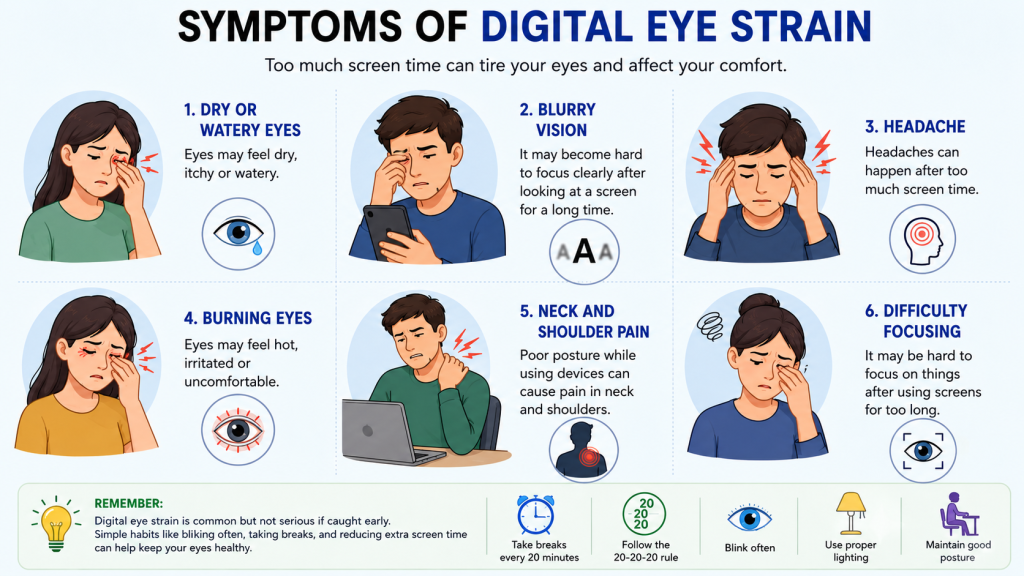
Common symptoms of digital eye strain include dry eyes, headache, blurry vision, watery eyes, and burning eyes. This problem can affect both children and adults because of too much screen time.
It may not be possible to completely avoid screens today, but simple habits can help protect the eyes. In this article, we will learn about the symptoms, causes, and easy relief tips for digital eye strain.
What Is Digital Eye Strain?
Digital eye strain (also called Computer Vision Syndrome) is a common problem in our modern lifestyle. It happens when we focus on digital devices like mobile phones or laptops for many hours without enough rest.
Today, screens are everywhere—from Indian students attending long online coaching classes to IT professionals working 9-to-5 on computers. Constant focus on these bright displays can tire the eye muscles, leading to persistent discomfort.
Many people ignore these early signs, but according to eye care experts, ignoring tired eyes every day can lead to long-term vision issues. Simple habits, like following a proper routine and blinking more often, can help protect your eyes from the harsh effects of screen-related discomfort.
Common Symptoms of Screen Fatigue
Digital devices affect everyone differently. Whether you are an office goer working on spreadsheets or a student watching long video lectures, your eyes can get exhausted. Here are the most common signs that you are suffering from eye discomfort:
- Dry or Watery Eyes: You might feel a gritty sensation, as if there is sand in your eyes. This often happens because we blink 50% less while looking at a screen.
- Blurry Vision: After a long day of continuous screen use, things may look cloudy or out of focus.
- Headaches: You might feel a dull pain around your eyes or forehead. (Note: Frequent, intense pain could be a Migraine. You can check our guide here: [Migraine Symptoms and Easy Home Relief Tips])
- Burning Sensation: Your eyes might feel hot, red, or irritated, especially after late-night mobile use.
- Neck and Shoulder Pain: This is a common part of Computer Vision Syndrome, caused by “text neck” or sitting in a poor position while using your laptop.
Computer vision syndrome is not a permanent disease if managed early. By simply blinking more often and following a healthy routine, you can keep your eyes fresh and healthy.
Main Causes of Digital Eye Strain
While technology is helpful, our eyes are not designed to stare at bright displays for 8–10 hours a day. Whether it’s late-night scrolling on Instagram or long office meetings on Zoom, certain habits can trigger Computer Vision Syndrome.
Here are the primary reasons why your eyes feel exhausted:
- Extended Screen Exposure: Looking at laptops for hours without a gap is the biggest cause of tired eyes. This is very common among IT professionals and students in India who have long working hours.
- The “Blink Gap”: Research shows that people blink 66% less while using screens. This “blink gap” leads to dry and irritated eyes because the eye surface doesn’t get enough moisture.
- Poor Lighting & Glare: Using a mobile phone in a completely dark room is a common habit that puts extreme pressure on the eyes. Also, light reflecting off your screen (glare) makes the eyes work double.
- Incorrect Brightness Levels: A screen that is much brighter or dimmer than your surroundings can cause screen-related eye discomfort.
- Improper Viewing Distance: Many of us have the habit of holding our phones too close to our faces. Sitting too near a monitor increases the strain on eye muscles.
- Digital Eye Strain Before Bed: Using devices right before sleep, especially in the dark, affects your sleep quality and leaves your eyes feeling heavy the next morning.
Taking regular breaks and using screens carefully may help reduce digital eye strain and keep the eyes healthy.
How Screen Time Affects Children and Adults
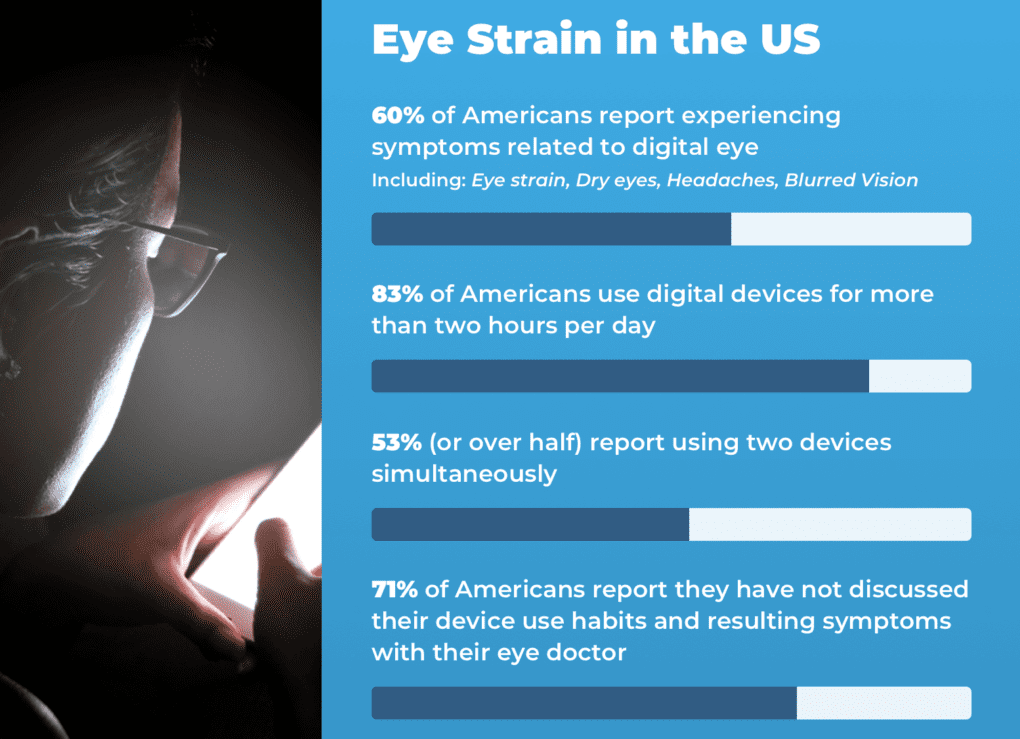
The impact of screens depends on how we use them. From Indian kids attending tuition-based apps to professionals handling WFH shifts, everyone faces different risks.
1. Impact on Children
Children’s eyes are still developing, and they often forget to take breaks while gaming or watching cartoons. According to eye care studies, excessive screen use in kids may cause:
- Digital Myopia Risk: Spending too much time on tablets and phones instead of outdoor play can increase the risk of nearsightedness.
- Focusing Issues: Kids may find it hard to focus on books after long hours of watching fast-moving digital videos.
- Sleep Disturbance: The blue light from screens can delay sleep, making children feel tired and irritated the next school morning.
- Dry Eyes: Children often stare at screens without blinking, which causes itchiness and discomfort.
2. Impact on Adults
For adults, screen time is often a necessity for work, but it takes a heavy toll on physical health. Common issues include:
Eye Redness: Continuous screen use without the 20-20-20 rule often results in red, irritated, or burning eyes by the end of the day.
Screen Fatigue from Long Shifts: IT professionals and office workers in India often spend 9+ hours in front of monitors, leading to persistent tired eyes.
Postural Problems: Many adults develop “Text Neck” or shoulder pain due to leaning forward while using laptops or scrolling through social media.
The Stress Factor: Constant online meetings and high screen brightness can trigger frequent headaches and mental exhaustion.
Easy Relief Tips at Home
You don’t always need expensive medicine to treat tired eyes. Small changes in your daily Indian lifestyle can provide great relief. Here are some practical tips:
- Master the 20-20-20 Rule: This is a gold standard for eye care. Every 20 minutes, take a 20-second break and look at something 20 feet away (like looking out of your window at a tree or the sky).
- The “Blink” Reminder: We often forget to blink while scrolling through Reels or working on Excel sheets. Make a conscious effort to blink more to keep your eyes moist and fresh.
- Create a Screen-Free Zone: Especially for students and WFH professionals, avoid looking at screens during your lunch break. Stand up, stretch, and let your eyes rest.
- Manage Your Environment: * Brightness: Match your screen brightness with the room light.
- Lighting: Never use your mobile in a dark room before bed. Always keep a side lamp or bulb on to reduce the contrast.
- Maintain an “Arm’s Length” Distance: Whether it’s a tablet or a smartphone, keep it at a comfortable distance. Holding it too close is a major cause of Computer Vision Syndrome.
- Clean Your Workspace: Dust on your laptop screen can cause glare, making your eyes work harder. Keep a small microfiber cloth handy to wipe your screens daily.
- Postures Matters: Sit in a chair that supports your back. If you are working from a sofa or bed, ensure your screen is at eye level to avoid neck strain.
- Hydrate for Eye Health: Drinking 8-10 glasses of water is not just good for your body but also prevents your eyes from getting dry and itchy.
Making these small changes every day may help protect the eyes and keep them comfortable.
When to See a Doctor
While most cases of screen fatigue improve with rest, some symptoms need professional attention. If you are an office worker or a student and your discomfort lasts for more than a few days despite following the 20-20-20 rule, it is time to visit an eye doctor (Ophthalmologist).
Consult a professional if you experience:
- Persistent Blurry Vision: If your vision remains cloudy or out of focus even when you are not using a device.
- Frequent Migraine-like Headaches: If you often get intense headaches that start after screen use and don’t go away.
- Chronic Redness or Irritation: If your eyes stay red, itchy, or painful for a long time, it could be a sign of severe dry eye syndrome.
- Difficulty Focusing: If you find it hard to shift focus between near and far objects after a long workday.
- Double Vision: If you start seeing double or notice flashes of light.
According to the World Health Organization (WHO) and global eye care experts, regular eye check-ups are essential in our digital age. An expert can check if you need blue-light blocking glasses or a specific prescription to reduce the load on your eye muscles.
Frequently Asked Questions (FAQs)
Q.1 Why do my eyes feel heavy after using a phone for a long time?
Looking at a mobile screen continuously can tire the eye muscles and reduce how often you blink. This may lead to screen fatigue, making the eyes feel heavy, dry, or uncomfortable.
Q.2 Is using a mobile phone in the dark harmful for the eyes?
Using a phone in a completely dark room may increase eye discomfort. The bright screen against dark surroundings can make the eyes work harder and cause discomfort. It is better to use soft room lighting while using screens at night.
Q. 3 Can screen time affect sleep quality?
Yes, excessive screen use before bedtime may disturb sleep because the blue light from screens can affect the body’s natural sleep cycle, making it harder to fall asleep.
Q. 4 Why do children blink less while using screens?
Children often focus deeply on games, cartoons, or videos and may forget to blink normally. This reduced blinking can lead to dry or irritated eyes and screen-related eye discomfort.
Q. 5 Can taking outdoor breaks help reduce screen fatigue?
Yes, spending time outdoors and looking at distant objects like trees or the sky may help relax the eye muscles after long periods of screen use.
Q. 6 Do laptops or mobile phones cause more eye strain?
Both can cause eye discomfort if used for long periods without breaks. However, mobile phones are often held too close to the face and usually have smaller text, which may increase eye strain compared to laptops.
Conclusion
Digital eye strain is a common problem caused by excessive screen time. Many people experience dry eyes, headaches, or blurry vision after using laptops or mobiles for long hours. In today’s digital world, from students in India to working professionals, everyone can be affected by this issue.
Simple habits like taking regular breaks, blinking often, and using proper lighting can make a big difference in managing screen fatigue. These small changes can help protect your vision and make technology use more comfortable. Your eyes work hard every day—give them the care and rest they truly deserve!