


Many parents feel their children are falling into The Homework Trap because of online homework and screen learning.
- The Mobile Problem at Home
- The Burden of School Apps
- The Danger of Shortcuts (AI and Google)
- Side Effects of The Homework Trap on Children
- Whose Responsibility is it? Tips for Schools & Parents
- Success Without Screens: Learning from the Past
- Questions People Ask
- 1. What is the right age for a child to have their own phone for school?
- 2. How to handle a child who gets angry when you take the phone away?
- 3. Does screen learning affect a child’s sleep?
- 4. Can we reward kids with screen time for finishing homework?
- Conclusion: Finding the Right Balance
Remember our school days? After school, we used to open our bags and check our diaries. We only needed a pencil and a notebook to do our homework.
But today, everything is different. Now, a child comes home and says, “Mummy, give me your phone.” This makes many parents wonder: Are children falling into The Homework Trap? Can children really study without screens today?
From online homework on WhatsApp to school apps like EduNext, screens have become a big part of learning. As parents, we want our children to study well, but we also worry about too much mobile use and screen time.
Why do kids need a phone for homework today? We all studied well without mobile phones, so why is it becoming difficult for children to learn without screens now? Is The Homework Trap really helping children learn better, or is it becoming a distraction?
Technology also has benefits when used correctly. Educational videos, online classes, and learning apps can help children understand lessons better. The real challenge is finding a healthy balance between digital learning and traditional study habits.
The Mobile Problem at Home
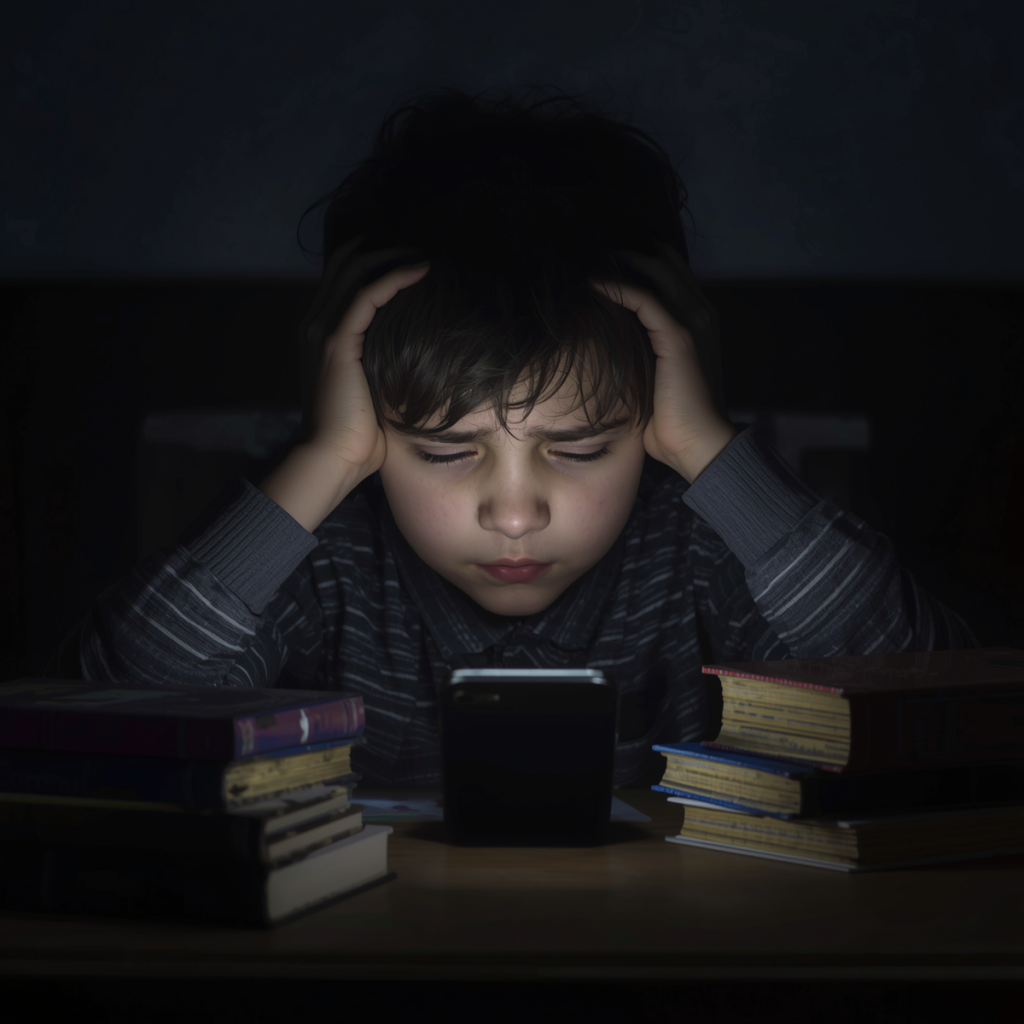
When a child takes a mobile phone for homework, the problem starts. Parents cannot say “No” because the child needs to check the school app or homework message. This is how many families slowly enter The Homework Trap.
But after getting the phone, children can get distracted very easily. A notification appears, a video opens, or a game catches their attention. Slowly, homework is forgotten, and screen time increases.
Many parents feel worried because children spend more time on mobiles than on books. This creates stress at home and affects study time. The Homework Trap is not only about homework now. It is also about children getting used to screens every day, and this habit can be hard to stop.

The Burden of School Apps
Today, many schools use apps like EduNext to share homework, holiday updates, and school notices. Parents have to download these apps so children can complete their work. This is another part of The Homework Trap.
Now, children need a good internet connection just to check their homework. If the internet is slow or not working, studying also stops. Everything has become online.
Earlier, children only needed books and notebooks to study. But now, they first need a mobile phone, an app, and sometimes even a password. Because of this, many children start thinking that screens are necessary for learning. The Homework Trap is making study time more dependent on mobiles instead of books.
The Danger of Shortcuts (AI and Google)
Today, children are very smart with phones. Even an 8-year-old child now thinks, “Why should I use my brain? I can just find the answer on Google or AI.”
This is a big problem. When children get quick answers online, they stop thinking. Homework is not just about finishing a task; it is about learning how to solve a problem. If they always use shortcuts, they will never learn to think deeply.
Instead of a quick search, it is much better to use a physical book. When children search for answers in a book, they learn the habit of reading. They see that real knowledge comes from books, not just from a 2-second search on a screen.
We need to show our kids that a mobile phone is just a tool. It should never replace their own thinking and hard work.
Side Effects of The Homework Trap on Children
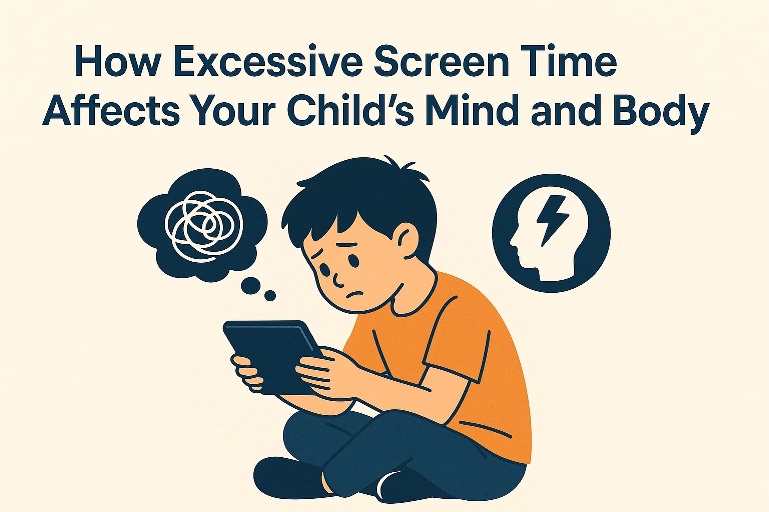
How do we know if our child is spending too much time on a screen? Even if it is for study, too much digital learning can have negative side effects. Here are some signs to watch for:
- Eye Strain and Fatigue: Does your child rub their eyes often or complain of headaches? Continuous screen use makes their eyes tired and dry. Excessive screen time can also lead to headaches. Read more about [Migraine symptoms and relief tips].
- Behavioral Changes & Irritation: If your child gets angry when you ask for the phone back after homework, it is a sign of screen dependency.
- Lack of Concentration: If a child finds it hard to sit with a simple book for 20 minutes, it’s because colorful screens make physical books feel “boring” to them.
- Poor Sleep Patterns: Using school apps or watching videos late at night affects their sleep, making them feel tired and less active the next day.

Whose Responsibility is it? Tips for Schools & Parents
We cannot just blame one side. To save our children from this “Homework Trap,” both schools and parents must work together.
What Schools Can Do:
- Encourage Diary Writing: Teachers should ask kids to note homework in a school diary. This improves handwriting and makes them less dependent on apps.
- Provide Printed Worksheets: If the homework is long, schools should give printed papers so children don’t have to stare at a screen for hours.
- Use Textbooks in Class: Instead of digital shortcuts, teachers should show students how to find answers in their textbooks to build a healthy reading habit.
What Parents Can Do:
- Be a Digital Role Model: Children follow what they see. If you reduce your own screen time, your child will naturally spend more time on books.
- Write it Down First: If the homework is on an app, ask your child to copy the questions in their notebook first. Then, they can finish the work without the phone.
- Screen-Free Study Table: Keep the mobile phone away from the study area. Only give it to them for a few minutes to check the task.
- The 20-20 Rule for Eyes: Tell your child to look at something far away for 20 seconds after every 20 minutes of screen use to relax their eyes.
- Discuss in PTM: Use Parent-Teacher Meetings to request schools to minimize app-based homework and focus more on offline learning.
Success Without Screens: Learning from the Past
It is important to remember that technology is a new tool. For many years, people learned successfully without any mobile phones or the internet.
Earlier generations also became successful doctors, engineers, and teachers. They did this by using books, handwritten notes, and classroom discussions. They did not depend on screens for every small answer.
The biggest lesson we can learn from the past is the habit of writing:
- Writing helps memory: When we write with a pen in a notebook, our brain remembers things better than just typing on a screen.
- Basic Skills: Many children today find it hard to write fast or have neat handwriting. This is because they spend more time “tapping” and “scrolling” than using a pen.
Progress is good, but we should not forget these basic skills. If we want our children to be successful, they still need the habit of reading from books and writing on paper.
Questions People Ask
1. What is the right age for a child to have their own phone for school?
Experts suggest waiting until the age of 14 (8th or 9th grade). Before that, it is better if children use their parents’ devices under supervision for homework to avoid the homework trap.
2. How to handle a child who gets angry when you take the phone away?
Instead of taking the phone suddenly, give them a “5-minute warning.” This helps their brain prepare to stop. Also, try to replace phone time with a quick physical activity like a 10-minute walk or a game.
3. Does screen learning affect a child’s sleep?
Yes, if they do homework on a screen late at night, the “blue light” makes it hard for them to fall asleep. Try to finish all screen-related tasks at least 1 hour before bedtime.
4. Can we reward kids with screen time for finishing homework?
It is better not to use screen time as a reward. This makes the phone seem like a “prize.” Instead, reward them with a favorite snack or extra playtime outside to keep a healthy balance.
Conclusion: Finding the Right Balance
In the end, technology is not our enemy, but our dependency on it is a problem. Screens should be used to gain information, not to replace the traditional way of learning.
As parents and teachers, it is our duty to ensure that a child’s education starts with a pen and a book, not a login and a password. Let’s encourage our children to write more, read more, and look at screens less. After all, a bright future is built with a sharp mind and a steady hand, not just a fast internet connection.
It is time to help our kids escape the homework trap and bring back the habit of reading books.