

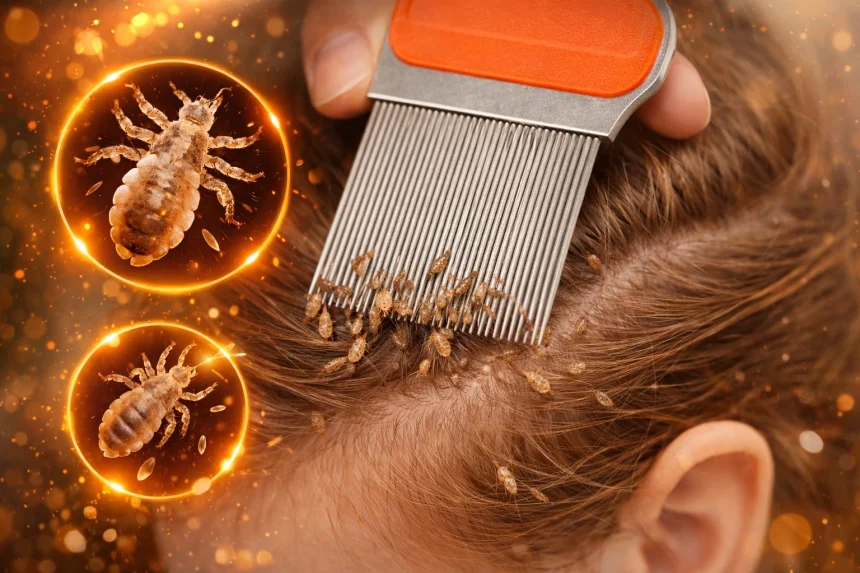
Hair fall during a lice infestation creates panic for many people, especially parents dealing with children’s scalp infections. A common question appears repeatedly in search results: does lice cause hair loss? Medical evidence shows that lice do not directly destroy hair follicles. However, secondary effects such as intense itching, scratching, scalp irritation, and infection may result in temporary hair shedding or breakage.
- The Connection Between Head Lice and Hair Loss
- Can Lice Treatment Cause Hair Loss?
- Possible Causes of Hair Loss During a Lice Infestation
- 1. Excessive Scratching
- 2. Scalp Inflammation
- 3. Secondary Infection
- 4. Stress-Related Shedding
- 5. Aggressive Nit Removal
- Signs Hair Loss May Be Linked to Lice
- Managing Hair Loss Caused by Lice Effects
- Treat the Infestation Quickly
- Avoid Harsh Scratching
- Gentle Hair Handling
- Restore Scalp Health
- Reduce Stress Levels
- How Long Does Hair Take to Grow Back After Lice?
- Preventing Hair Damage During Future Lice Episodes
- Other Causes That May Be Mistaken for Lice-Related Hair Loss
- Key Takeaways
- FAQs
Understanding the exact relationship between lice and hair loss helps prevent unnecessary stress and ensures correct treatment choices.
The Connection Between Head Lice and Hair Loss
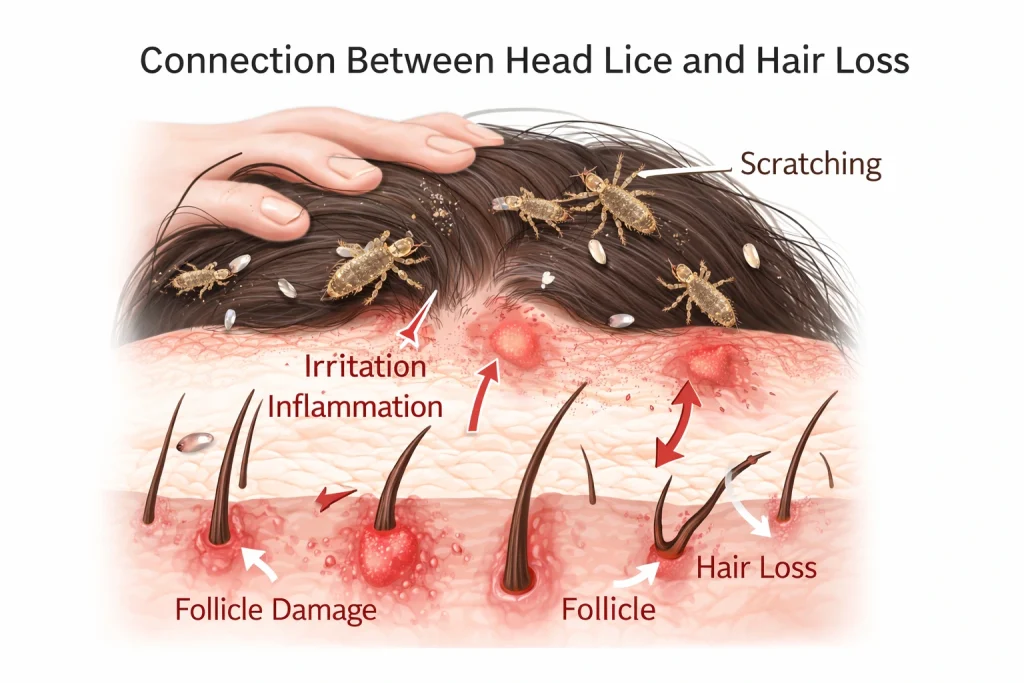
Head lice are tiny parasites that survive by feeding on small amounts of blood from the scalp. They live close to the hair roots where warmth supports egg development. These parasites do not eat hair, damage follicles directly, or trigger permanent baldness.
Hair fall usually happens due to indirect effects:
- Constant itching leads to aggressive scratching
- Scratching injures scalp skin and weakens hair shafts
- Open wounds increase risk of bacterial infection
- Inflamed follicles may temporarily stop producing healthy hair
- Stress related to infestation can trigger temporary shedding
This type of hair loss is commonly temporary and hair growth usually returns after successful treatment and scalp healing.
Can Lice Treatment Cause Hair Loss?
Many people assume medicated shampoos or lice removal products cause permanent hair damage. Medical research indicates that most approved treatments do not cause true hair loss. However, some side effects may create the impression of hair fall:
- Temporary dryness of hair strands
- Breakage during combing with fine lice combs
- Mild scalp irritation caused by chemical sensitivity
- Weak hair snapping when brushing repeatedly
Proper usage following instructions greatly reduces these effects. Gentle handling of hair during treatment prevents unnecessary breakage.
Possible Causes of Hair Loss During a Lice Infestation
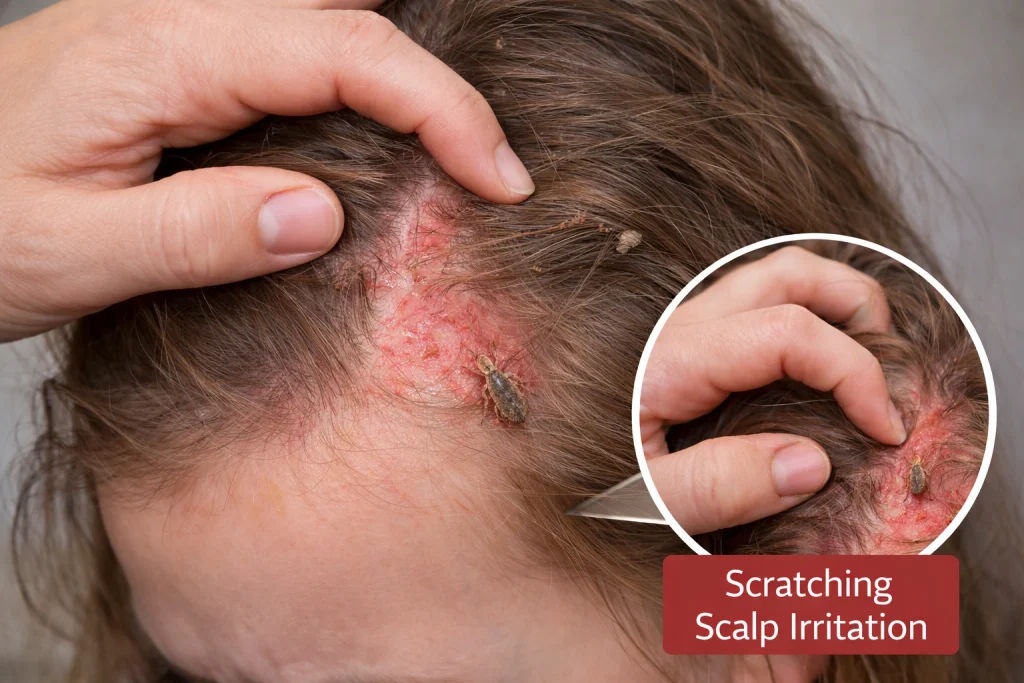
Several factors explain why hair thinning sometimes appears while lice are present:
1. Excessive Scratching
Persistent scratching weakens hair roots and damages follicles. Broken hair strands appear similar to hair fall even though follicles remain healthy.
2. Scalp Inflammation
Lice bites create allergic reactions in some individuals. Swelling, redness, and irritation reduce follicle strength temporarily.
3. Secondary Infection
Open scratch wounds allow bacteria to enter the skin. Infection can interrupt the hair growth cycle until healing occurs.
4. Stress-Related Shedding
Anxiety related to infestation, social embarrassment, or repeated treatment cycles can trigger telogen effluvium, a temporary hair shedding condition.
5. Aggressive Nit Removal
Frequent harsh combing or pulling eggs manually weakens hair shafts and leads to mechanical breakage.
Signs Hair Loss May Be Linked to Lice
Hair loss associated with lice usually shows clear scalp symptoms:
- Persistent itching or crawling sensation
- Small red bumps near the scalp
- Visible lice or eggs attached near hair roots
- Hair breakage close to the scalp surface
- Patchy thinning where scratching occurs most
If hair fall occurs without these symptoms, other medical causes may need evaluation.
Managing Hair Loss Caused by Lice Effects
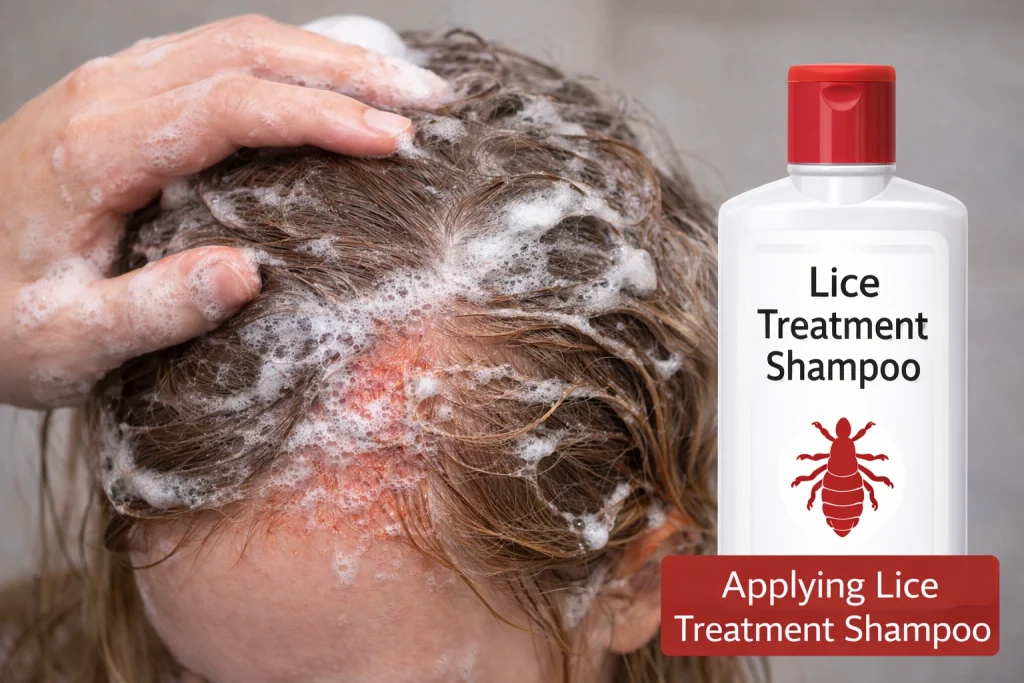
Effective management involves treating both lice infestation and scalp recovery.
Treat the Infestation Quickly
Early treatment prevents prolonged irritation and reduces follicle damage. Over-the-counter medicated shampoos, prescription lotions, or professional lice removal methods eliminate parasites effectively when instructions are followed carefully.
Avoid Harsh Scratching
Keeping nails trimmed and using soothing scalp lotions reduces scratching intensity. Anti-itch scalp sprays or aloe-based solutions can calm irritation.
Gentle Hair Handling
- Use wide-tooth combs instead of frequent fine combing
- Limit tight hairstyles such as braids or ponytails
- Avoid high-heat styling tools temporarily
- Pat dry hair instead of rough towel rubbing
Restore Scalp Health
Mild shampoos, coconut oil massage, or dermatologist-recommended scalp moisturizers help healing. Healthy scalp circulation supports faster regrowth.
Reduce Stress Levels
Stress contributes significantly to temporary shedding. Proper sleep, balanced nutrition, and hydration improve recovery speed.
How Long Does Hair Take to Grow Back After Lice?
Hair regrowth generally begins once infestation and scalp irritation are controlled. Most individuals notice improvement within 6–12 weeks, depending on the severity of scratching or infection. Permanent hair loss remains extremely rare unless severe untreated infections lead to scarring.
Preventing Hair Damage During Future Lice Episodes
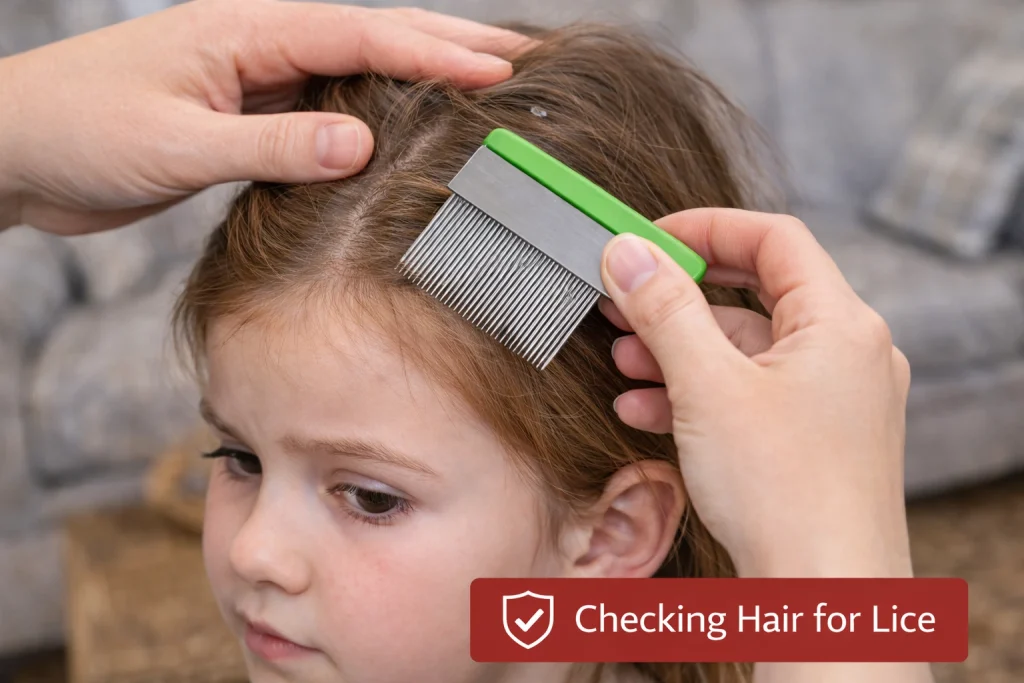
Prevention strategies reduce risk of repeated infestations and associated hair thinning:
- Avoid sharing combs, hats, pillows, or hair accessories
- Conduct routine scalp checks for children in schools
- Tie long hair during group activities
- Clean bedding and clothing thoroughly after treatment
- Treat all affected family members simultaneously
Consistent prevention lowers chances of repeated hair damage cycles.
Other Causes That May Be Mistaken for Lice-Related Hair Loss
Hair fall occurring simultaneously with lice may not always be linked to infestation. Other common causes include:
- Hormonal changes
- Nutritional deficiencies such as iron or vitamin D
- Thyroid disorders
- Alopecia areata
- Severe illness or surgery recovery
- Certain medications
Consulting a dermatologist becomes important when hair shedding continues after lice removal.
Key Takeaways
- Lice do not directly cause permanent hair loss.
- Hair fall usually results from scratching, irritation, infection, or stress.
- Most lice-related hair thinning is temporary and reversible.
- Early treatment and gentle hair care prevent major damage.
- Persistent hair loss requires medical evaluation to identify other causes.
FAQs
Does lice cause permanent hair loss?
Permanent hair loss rarely occurs. Temporary thinning caused by scratching or infection typically reverses once scalp health improves.
Does lice shampoo cause hair loss?
Approved treatments may cause dryness or irritation but do not damage follicles permanently when used correctly.
Can lice eggs cause hair loss?
Eggs themselves do not cause hair fall. Damage happens mainly due to scratching and aggressive removal methods.
Will hair grow back after lice?
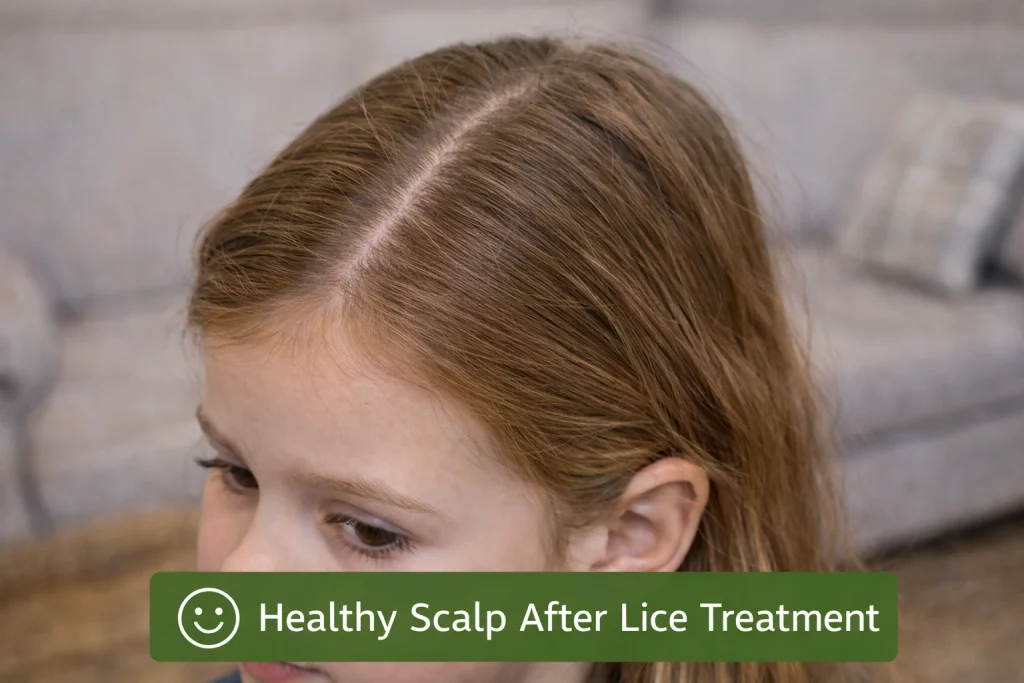
Yes. Once infestation clears and scalp heals, normal hair growth resumes in most cases.