

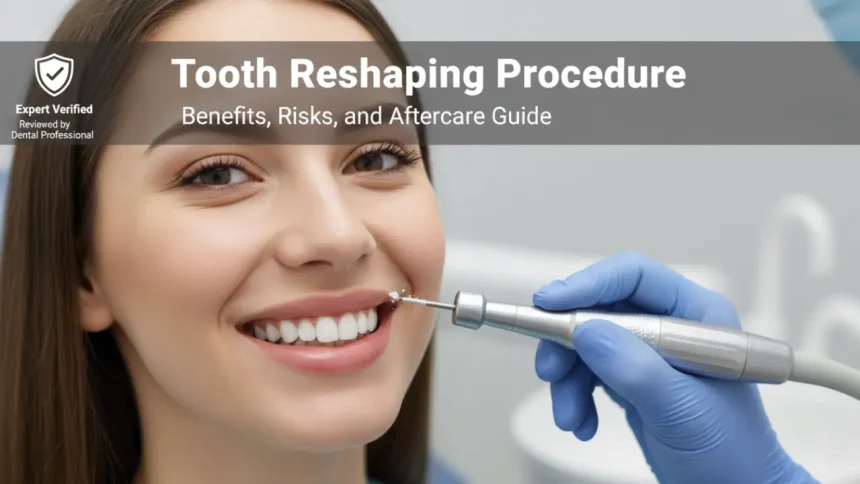
Tooth reshaping is a cosmetic dental procedure designed to enhance the appearance of teeth by correcting minor imperfections. It can improve smile symmetry, boost confidence, and provide a more balanced tooth structure without invasive treatment. Many people consider tooth reshaping as an alternative to braces or veneers when the concern is mild and limited to shape, length, or surface irregularities.
Also known as odontoplasty, tooth reshaping involves the careful removal of small amounts of tooth enamel. The process is simple, quick, and typically completed in a single dental visit. While the procedure is effective for subtle cosmetic changes, it is not suitable for everyone, and understanding its scope is essential before moving forward.
Tooth reshaping is a cosmetic dental procedure designed to enhance the appearance of teeth by correcting minor imperfections. At tryforhealth, this procedure is explained as a conservative cosmetic option that focuses on subtle improvements in tooth shape and alignment without invasive treatment.
What Is Tooth Reshaping?
Tooth reshaping refers to a cosmetic dentistry technique where the dentist modifies the outer enamel layer of a tooth to improve its shape, size, or surface texture. It is commonly used for teeth that appear chipped, uneven, slightly misaligned, or excessively long.
The procedure focuses on refining the natural structure of the tooth rather than covering it. In some cases, a tooth-colored bonding resin may be applied after reshaping to enhance the final appearance and restore symmetry. Because enamel does not regenerate, this procedure is only recommended when sufficient enamel thickness is present.
According to dental care guidance shared by tryforhealth, tooth reshaping works best when cosmetic concerns are limited to enamel-level imperfections rather than structural dental problems.
Who Is a Suitable Candidate for Tooth Reshaping?
Tooth reshaping is suitable for individuals with healthy teeth and gums who have minor cosmetic concerns. The procedure works well when imperfections are limited to small chips, uneven edges, slight overlap, or minimal length differences between teeth.
This treatment is not intended for major alignment issues or structural damage. Teeth that are severely crooked, crowded, or weakened by decay may require orthodontic treatment, crowns, or veneers instead. A dental examination is essential before reshaping, as the dentist must confirm that enamel strength and gum health are adequate for the procedure.
Disadvantages and Limitations of Tooth Reshaping
Although tooth reshaping is considered safe and straightforward, it has limitations. Since the process removes enamel, excessive reshaping can lead to tooth sensitivity, especially when exposed to hot or cold temperatures. The changes made are permanent, and reversing them is not possible.
Cost can also be a consideration. Tooth reshaping may range from moderate to higher pricing depending on the extent of work and whether bonding is required. Because it is categorized as cosmetic dentistry, dental insurance coverage is often limited or unavailable unless the reshaping corrects damage caused by trauma.
How the Tooth Reshaping Procedure Works
The process begins with a dental examination and imaging to assess enamel thickness, tooth structure, and gum health. If the teeth are suitable, the dentist reshapes the enamel using precision tools such as sanding discs or fine diamond burs.
Once the desired contour is achieved, the tooth surface is smoothed and polished. If bonding is part of the treatment, a tooth-colored resin is applied, molded to match the natural tooth shape, and hardened using a special curing light. This additional step enhances appearance and may improve tooth balance or close minor gaps.
The procedure is generally painless and does not require anesthesia in most cases.
Aftercare Following Tooth Reshaping
After tooth reshaping, most individuals return to daily routines immediately. Mild sensitivity may occur for a short period, particularly if bonding material is used. Maintaining good oral hygiene is important to preserve results and prevent staining.
Avoiding habits that place pressure on teeth, such as nail biting or chewing hard objects, can help protect reshaped or bonded areas. Regular brushing and professional dental checkups support long-term results and oral health stability.
Conclusion
Tooth reshaping offers a practical cosmetic solution for individuals seeking subtle improvements in tooth appearance without extensive dental procedures. It can enhance smile aesthetics, improve confidence, and correct minor irregularities efficiently.
However, the procedure is not suitable for every dental concern. Consulting a qualified dentist helps determine whether tooth reshaping or another treatment option is the best choice based on enamel health, tooth alignment, and cosmetic goals.
Dental information published on tryforhealth emphasizes the importance of professional consultation before choosing cosmetic procedures, ensuring enamel safety and long-term oral health.
Frequently Asked Questions
Q1.Is tooth reshaping painful?
Tooth reshaping is generally painless because it involves only surface enamel. Most people do not require anesthesia during the procedure.
Q2.How long does tooth reshaping last?
The results of tooth reshaping are permanent. Since enamel does not grow back, maintaining oral care is important to preserve the reshaped structure.
Q3.Can tooth reshaping fix crooked teeth?
Tooth reshaping can improve the appearance of very mild misalignment. More significant alignment concerns usually require orthodontic treatment.
Q4.Does tooth reshaping weaken teeth?
When performed correctly on healthy teeth, tooth reshaping does not weaken teeth. Excessive enamel removal, however, can increase sensitivity.
Q5.Is bonding always required with tooth reshaping?
Bonding is not mandatory. It is used only when additional shaping, gap correction, or surface restoration is needed.