


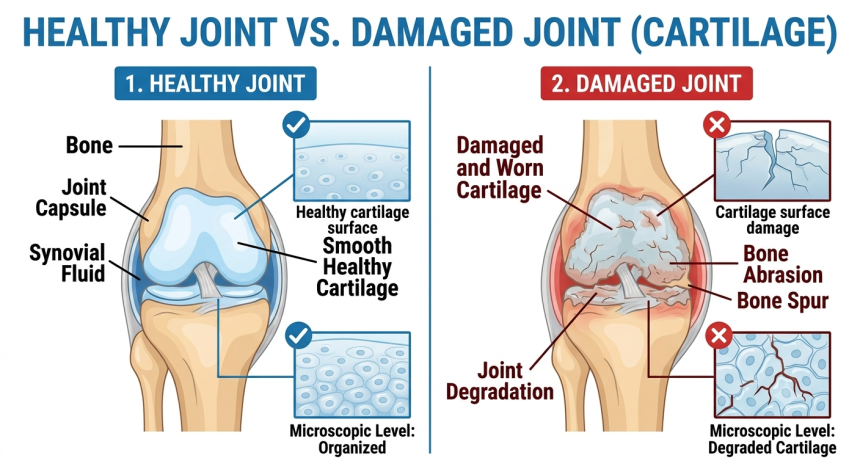
Many people experience joint pain, stiffness, or difficulty moving as they get older. While these symptoms can have different causes, one common reason is osteoarthritis. This condition occurs when the protective cartilage inside a joint slowly breaks down over time.
- What Is Osteoarthritis?
- Symptoms of Osteoarthritis
- Causes and Risk Factors of Osteoarthritis
- How Is Osteoarthritis Diagnosed?
- Treatment Options for Osteoarthritis
- 1. Exercise
- 2. Physical Therapy
- 3. Weight Management
- 4. Pain Relief Medicines
- 5. Support Devices
- 6. Lifestyle Changes
- 7. Yoga and Gentle Stretching
- 8. Surgery (Severe Cases)
- Final Note
- When Should You See a Doctor?
- Final Thoughts
- Frequently Asked Questions (FAQs)
As the cushioning between bones becomes thinner, everyday activities such as walking, climbing stairs, bending, or using the hands may become more difficult. Over time, it may affect comfort, mobility, and overall quality of life.
In this article, you will learn about osteoarthritis, its common symptoms, possible causes, diagnosis methods, and available treatment options.
What Is Osteoarthritis?
In our guide on arthritis, we explained that there are many different types of joint conditions. Osteoarthritis (OA) is the most common type and develops when the cartilage that protects the ends of bones inside a joint gradually wears down over time.
Cartilage is a smooth tissue that helps joints move easily and absorbs shock during daily activities. As it becomes thinner, the bones may begin to rub against each other, leading to pain, stiffness, swelling, and reduced movement.
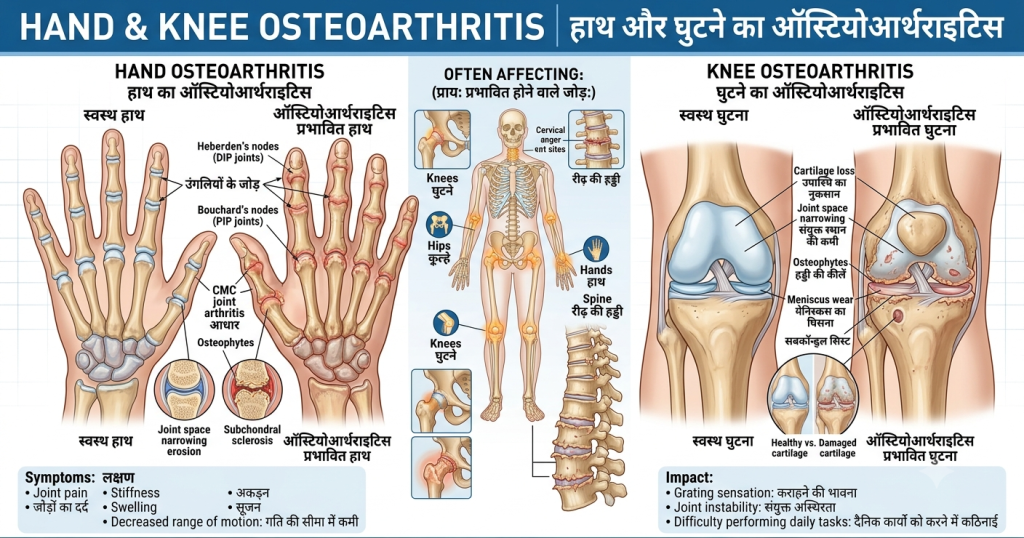
This condition can affect almost any joint, but it is most commonly seen in the knees, hips, hands, and spine. Signs often appear gradually and may become more noticeable with age.
Symptoms of Osteoarthritis
Joint Pain
Pain is one of the most common symptoms. It may occur while walking, climbing stairs, bending, or using the affected joint.
Stiffness
The joint may feel stiff after waking up or sitting for a long time. Morning stiffness is common, but it usually improves after a short period of movement. It often becomes easier to move after some activity.
Reduced Flexibility
It may become harder to fully bend, stretch, or move the affected area. Some people notice that certain movements are not as easy as they were before.
Cracking or Clicking Sounds
Some people hear or feel cracking, clicking, or grinding sounds when moving the joint.
Mild Swelling
The area around the joint may become slightly swollen or tender, especially after regular use.
Weak Grip
If the condition affects the hands, holding objects firmly may become more difficult. Tasks such as turning keys, buttoning clothes, writing, or using kitchen tools may require more effort than before.
Difficulty With Daily Activities
Everyday tasks may become more challenging. Some people find it harder to climb stairs, get up from a chair, bend down to pick up objects, or knead dough.
Symptoms may be mild at first, but they can gradually affect comfort and movement if the condition progresses.
Causes and Risk Factors of Osteoarthritis
Osteoarthritis usually develops gradually over time. It happens when the cartilage that protects the joints slowly wears down. While aging is a common factor, several other things may increase the risk of developing this condition.
Older Age
The risk increases with age because joints naturally experience more wear and tear over the years.
Previous Joint Injuries
A past injury from sports, accidents, or other physical activities may increase the chances of developing joint problems later in life.
Repeated Stress on Joints
Jobs or activities that involve frequent kneeling, bending, lifting, or repeated movements can place extra stress on certain joints.
Excess Weight
Carrying extra body weight puts additional pressure on weight-bearing joints, especially the knees and hips.
Family History
Some people may have a higher risk if close family members have experienced similar joint problems.
Bone or Joint Structure Problems
Certain bone or joint changes can place uneven pressure on the joints, which may increase wear over time.
How Is Osteoarthritis Diagnosed?
A doctor may diagnose osteoarthritis based on your symptoms, medical history, and a physical examination. During the examination, the doctor may check for pain, swelling, stiffness, and how well the affected joint moves.
To confirm the diagnosis or rule out other conditions, additional tests may be recommended, such as:
X-rays
X-rays can help show changes in the joint, including cartilage loss, bone spurs, or narrowing of the joint space.
MRI Scans
In some cases, an MRI may be used to provide a more detailed view of the joint and surrounding tissues.
Blood Tests
There is no specific blood test for osteoarthritis. However, blood tests may help rule out other conditions, such as rheumatoid arthritis.
Early diagnosis can help manage symptoms more effectively and support better joint function over time.
Treatment Options for Osteoarthritis
There is no permanent cure for osteoarthritis, but treatment can help reduce pain, improve joint movement, and make daily activities easier. The approach depends on how severe the symptoms are and which joints are affected.
1. Exercise
Regular light exercise such as walking, swimming, and cycling helps keep the joints flexible. Gentle movement also supports the muscles around the joints and reduces stiffness over time.
2. Physical Therapy
A physical therapist can suggest simple exercises that are safe for the joints. These exercises help improve movement, reduce pain, and make daily activities easier.
3. Weight Management
Maintaining a healthy weight helps reduce pressure on joints like the knees and hips. Even a small reduction in weight can make a noticeable difference in pain and comfort.
4. Pain Relief Medicines
Doctors may suggest medicines to manage pain and swelling when needed. In some cases, creams or gels are also used for local relief.
5. Support Devices
Tools like knee braces, walking sticks, or shoe inserts can help reduce strain on the joints. These devices also make walking and daily movement easier.
6. Lifestyle Changes
Small changes in daily routine can help manage symptoms better. Avoiding heavy strain, maintaining good posture, and resting the joints when needed can reduce discomfort.
7. Yoga and Gentle Stretching
Simple yoga and stretching exercises can help improve flexibility and reduce stiffness. These can be done at home for a few minutes daily. Movements should always be slow and comfortable, without putting extra pressure on the joints.
A short 10-minute gentle yoga routine at home, such as Simple 10-Minute Home Workout for Beginners, may also help improve daily movement and flexibility.
8. Surgery (Severe Cases)
In advanced cases, when other treatments do not provide enough relief, surgery may be recommended. Joint replacement is commonly done for severe knee or hip damage.
Final Note
Every person’s condition is different, so treatment should always be planned with a healthcare professional based on individual needs.
When Should You See a Doctor?
Occasional joint pain is not always a cause for concern. However, it may be a good idea to seek medical advice if symptoms continue or begin to affect daily life.
You should consider seeing a doctor if:
- Joint pain lasts for several weeks.
- Stiffness or swelling does not improve.
- A joint becomes difficult to move.
- Pain interferes with daily activities such as walking, climbing stairs, or using your hands.
- Symptoms keep returning or gradually become worse.
- The affected area feels warm, tender, or noticeably swollen.
Early diagnosis and treatment may help manage symptoms and support better joint function over time.
For additional information, readers can refer to trusted resources such as the NHS Osteoarthritis Overview and the Arthritis Foundation – Osteoarthritis.
Final Thoughts
Osteoarthritis is a common joint condition that can affect comfort, movement, and daily activities over time. While symptoms often develop gradually, early recognition and proper management may help reduce discomfort and improve quality of life.
If you experience ongoing joint pain, stiffness, or difficulty with everyday tasks, it is important to speak with a healthcare professional. A proper diagnosis can help identify the cause of your symptoms and guide the most appropriate treatment plan.
With the right care, lifestyle changes, and medical support when needed, many people are able to stay active and manage their symptoms effectively.
Frequently Asked Questions (FAQs)
Q1: Can changing my diet help with osteoarthritis?
Yes. Eating foods that fight inflammation—like berries, fish, green leafy vegetables, and olive oil—can help reduce joint pain and swelling.
Q2: Is a hot pack or cold pack better for joint pain?
Both help in different ways. Use a hot pack to relax stiff joints before moving. Use an ice pack after activities to reduce sharp pain and swelling.
Q3: Can people with osteoarthritis still do workouts?
Yes! Light workouts like swimming, cycling, and stretching are great. They keep the joints moving smoothly without putting too much pressure on them.
References & Sources:
- Mayo Clinic: Osteoarthritis – Symptoms and Causes.
- World Health Organization (WHO): Musculoskeletal conditions and Osteoarthritis facts.
- NHS UK: Osteoarthritis Guide and Treatment Options.