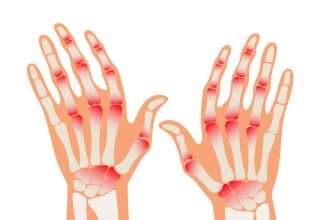


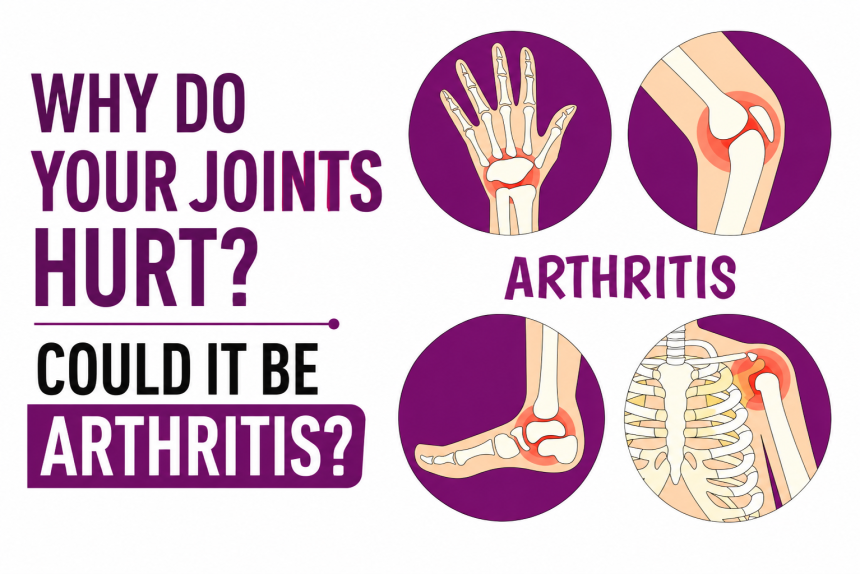
Many people experience pain in their knees, fingers, hips, or ankles at some point in life. Sometimes this pain goes away after rest, but in other cases it may continue for weeks or even months. You may also notice swelling, stiffness, or difficulty moving the affected joint.
- What Is Arthritis?
- Types of Arthritis
- Common Signs and Symptoms
- Joint Pain
- Swelling Around the Joint
- Difficulty Moving After Rest
- Reduced Range of Movement
- Warm or Red Joints
- Common Causes of Joint Problems
- Wear and Tear Over Time (Osteoarthritis)
- Immune System Problems (Rheumatoid Arthritis)
- Age
- Family History
- Previous Joint Injuries
- Excess Weight
- Is It Arthritis or Just Normal Joint Pain?
- When Should You See a Doctor?
- How Is the Condition Diagnosed?
- Treatment Options
- Final Thoughts
- Frequently Asked Questions
While occasional joint pain can have many causes, ongoing pain may be a sign of an underlying joint problem. This condition can affect movement and make daily activities more difficult over time. Recognizing early signs is important because timely medical advice may help manage symptoms and protect joint health.
In this article, you will learn about arthritis, its common symptoms, possible causes, and when it may be time to speak with a healthcare professional.
What Is Arthritis?
A joint is a place where two bones meet. Knees, fingers, hips, shoulders, and ankles are all joints. These joints help you move, walk, bend, and perform daily activities.
This condition affects the joints and can cause pain, swelling, and stiffness. Some people may also find it difficult to move the affected area.
This is not a single disease. There are more than 100 different types. Some happen when the protective tissue inside a joint slowly wears down over time. Others occur when the body’s immune system mistakenly attacks healthy joints.
No matter the type, it can make daily life and movement difficult if not managed properly.
Types of Arthritis
There are different types of this condition, and each one affects joints in a different way:
- Osteoarthritis: Joints slowly become weak and painful due to age or regular use.
- Rheumatoid Arthritis: The body’s defense system mistakenly attacks the joints, causing pain and swelling.
- Gout: Sudden and sharp joint pain occurs when uric acid builds up in the body.
- Psoriatic Arthritis: Joint pain occurs along with a skin condition called psoriasis.
- Juvenile Arthritis: Children experience pain, swelling, and stiffness in their joints.
These types may seem similar, but their causes and treatment are different.
Common Signs and Symptoms
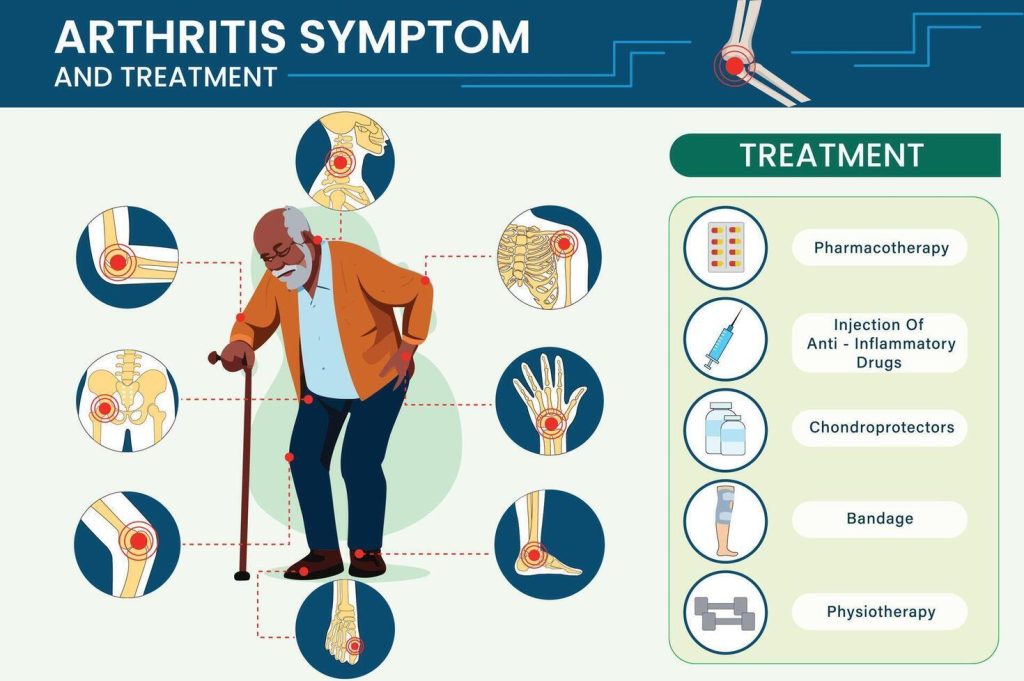
The signs of joint pain can develop slowly over time. Some people notice only mild symptoms at first, while others may experience more discomfort. Common symptoms include:
Joint Pain
Pain is one of the most common signs of arthritis. It can affect the knees, fingers, hips, ankles, or other joints. The pain may come and go, or it may last for a long time.
Swelling Around the Joint
The affected joint may become swollen or look larger than usual. Swelling can make daily activities more difficult.
Difficulty Moving After Rest
Many people find that their joints feel tight or harder to move after waking up or sitting for a long time. Movement often becomes easier as the body starts moving.
Reduced Range of Movement
Arthritis can make it harder to bend, stretch, or move a joint normally. Simple tasks may become more challenging over time.
Warm or Red Joints
In some types of the condition, the skin around the joint may feel warm or appear red. This can be a sign of inflammation inside the joint.
Some people may also experience heel discomfort. Learn more about common causes of heel pain in our related article.
Common Causes of Joint Problems
Arthritis can develop for different reasons. The exact cause depends on the type of joint condition, but several factors may increase the risk.
Wear and Tear Over Time (Osteoarthritis)
As people get older, the protective cartilage inside the joints can gradually wear down. When this happens, the bones may rub against each other, leading to pain, swelling, and reduced movement.
Immune System Problems (Rheumatoid Arthritis)
In rheumatoid arthritis, the body’s immune system mistakenly attacks healthy joints. This can cause inflammation, pain, swelling, and joint damage over time.
Age
As people get older, their joints naturally experience more wear and tear. This can increase the risk of osteoarthritis and other joint problems.
Family History
Some forms of arthritis can run in families. Having a close family member with arthritis may increase your risk.
Previous Joint Injuries
A past injury to the knee, ankle, shoulder, or other joint may raise the chance of developing arthritis later in life.
Excess Weight
Carrying extra body weight puts more pressure on weight-bearing joints such as the knees and hips. Over time, this added stress can contribute to joint problems.
Is It Arthritis or Just Normal Joint Pain?
Not every joint pain is caused by a long-term joint condition. Understanding the difference can help you decide when it may be time to seek medical advice.
Normal Joint Pain
Joint pain can occur after exercise, physical work, or a minor injury. It usually improves with rest and often goes away within a few days. Most people do not experience ongoing swelling or repeated symptoms.
Arthritis-Related Pain
Pain linked to this condition is often more persistent. It may last for weeks or months, return frequently, or gradually become worse over time. Some people also notice swelling, difficulty moving a joint, or symptoms that keep coming back. If the pain does not improve or starts affecting daily activities, it may be time to seek medical advice.
When Should You See a Doctor?
Occasional joint pain is not always a cause for concern. However, it is important to seek medical advice if symptoms continue or become worse over time.
You should consider seeing a doctor if:
- Joint pain lasts for several weeks.
- Swelling does not improve.
- A joint becomes difficult to move.
- Pain affects daily activities such as walking, climbing stairs, or holding objects.
- The joint feels warm or looks red.
- Symptoms keep returning or gradually become worse.
Early diagnosis can help identify the cause of joint pain and may improve long-term joint health.
How Is the Condition Diagnosed?
If a doctor suspects a joint condition, they may ask about your symptoms, medical history, and daily activities. A physical examination can help identify swelling, tenderness, or difficulty moving a joint.
To confirm the diagnosis, a doctor may recommend:
- Blood tests to look for signs of inflammation
- X-rays to check for joint damage
- Other imaging tests, such as MRI or ultrasound, in some cases
The tests used will depend on the underlying cause of the symptoms.
Treatment Options
There is no single treatment that works for every joint condition. The goal of treatment is usually to reduce pain, improve movement, and help protect the joints.
Common treatment options may include:
- Medicines recommended by a doctor.
- Regular physical activity and gentle exercises.
- Physical therapy.
- Maintaining a healthy weight.
- Using supportive devices when needed.
The best treatment plan depends on the underlying condition and the severity of symptoms.
For more information, you can visit trusted health resources such as the Arthritis Foundation and the NHS Arthritis Overview.
Final Thoughts
Joint pain is common, but it should not always be ignored. While some aches may be temporary and improve with rest, ongoing pain, swelling, or difficulty moving a joint could be signs of an underlying joint condition.
Recognizing the symptoms early and seeking medical advice when needed can help you manage the condition more effectively. If you have persistent joint pain or symptoms that keep returning, speaking with a healthcare professional is the best way to understand the cause and receive appropriate care.
Medical Disclaimer: The information provided in this article is for educational purposes only and should not be considered medical advice. Always seek guidance from a qualified healthcare professional for diagnosis and treatment.
Frequently Asked Questions
The most common types are osteoarthritis and rheumatoid arthritis. One develops due to wear and tear in the joints, while the other is caused by the immune system attacking healthy joint tissue.
Yes. Although this condition is more common in older adults, some forms can affect younger people as well. Anyone who has ongoing joint pain, swelling, or difficulty moving a joint should speak with a healthcare professional.
Most forms of this condition cannot be cured. However, proper treatment may help reduce pain, improve movement, and support long-term joint health.
Joint pain is often the most common symptom. Swelling, stiffness, and difficulty moving a joint may also occur. Symptoms can vary depending on the type of condition.