


When a child is diagnosed with muscular dystrophy, parents naturally have many questions…
- Can This Condition Affect Different Age Groups?
- 5 Early Signs of Muscular Dystrophy in Children
- Why Does This Condition Happen?
- How the Body Changes Over Time
- How Doctors Diagnose the Condition
- Treatment and Supportive Care
- What Parents Can Do Next
- Final Thoughts
- Frequently Asked Questions (FAQs)
- Q1. Can children with muscular dystrophy attend school normally?
- Q2. Can weather or cold temperatures affect muscle discomfort?
- Q3. Do all children with muscular dystrophy lose the ability to walk?
- Q4. Can children with muscular dystrophy do physical activities?
- Q5. Can emotional support help children with muscular dystrophy?
Muscular dystrophy in children is a group of genetic conditions that slowly weaken the muscles. It can affect a child’s ability to walk, run, and do normal daily activities.
Early detection of symptoms is important because it helps in timely diagnosis and early care like physiotherapy, which can support better movement and quality of life.
In young children, early signs may be seen when parents notice problems like difficulty in running, climbing stairs, or getting tired quickly during play. These signs do not always mean a serious problem, but if they continue or get worse, a doctor should be consulted.
Can This Condition Affect Different Age Groups?
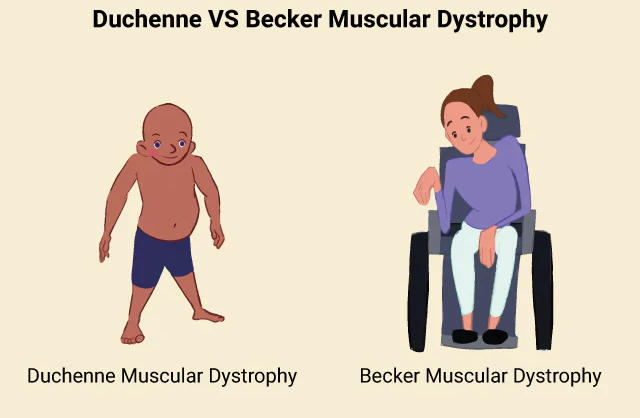
Yes, this condition can affect people at different ages, but the symptoms and severity depend on the specific type. In children, it is mainly seen in two common forms:
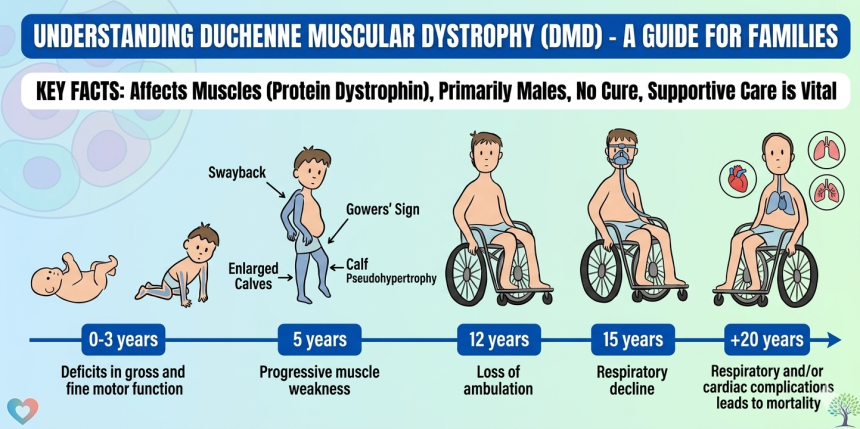
- Duchenne (DMD): This is the most common and more severe childhood type. Symptoms usually appear between 3–5 years of age and progress faster over time.
- Becker (BMD): This is a milder form of the condition. Symptoms usually appear later in childhood or teenage years and progress more slowly.
Understanding these differences helps doctors plan the right care and support from an early stage.
5 Early Signs of Muscular Dystrophy in Children
In young children, the first signs often appear slowly during daily activities or playtime. Parents may notice small signs of muscle weakness that continue over time.
- Difficulty Getting Up From the Floor: A child may use their hands for support while standing up instead of getting up easily using their leg strength alone.
- Walking on Toes: Some children may walk on their toes most of the time or develop an unusual walking style.
- Frequent Falls: A child may trip, lose balance, or fall more often while running or playing.
- Large Calf Muscles: The lower leg muscles may appear bigger than normal, even though the muscle strength is reduced.
- Getting Tired Quickly: Activities like climbing stairs, jumping, or running may become difficult or tiring for the child.
If you want to understand the basics of physical movement and safe starting routines, you can also read our guide on Home Workouts for Beginners.
Why Does This Condition Happen?
To understand these physical changes, it helps to know how muscles stay strong in the body.
Our muscles need special proteins to stay strong and work properly. In children with this condition, the body cannot make these proteins correctly. Because of this, the muscles slowly become weak over time.
This condition is linked to changes in genes and can run in families. In some cases, parents may already know about a family history, while in others, it may appear without any earlier signs in the family.
Some childhood forms, especially Duchenne, are more common in boys. In rare cases, girls may also carry the gene or show mild symptoms.
How the Body Changes Over Time
In many children, physical changes become more noticeable as the condition progresses. Early development may appear normal, but gradually muscle weakness starts to affect daily activities and physical balance.
Over time, families may notice changes such as:
- Difficulty climbing stairs or stepping onto raised surfaces
- A waddling walk or walking on toes due to calf muscle weakness
- Trouble standing up from the floor or a sitting position
- Changes in posture, such as an increased curve in the lower back
- In later stages, weakness in breathing or chest muscles
Understanding these changes helps families and healthcare providers plan timely supportive care and interventions as needed.

How Doctors Diagnose the Condition
Diagnosing muscular dystrophy involves a combination of clinical evaluation and medical tests. Early diagnosis helps confirm the condition, rule out other possible causes, and guide the right care plan for the child.
Doctors may use the following tests:
- CK Blood Test: This blood test checks the level of creatine kinase (CK), an enzyme that is usually higher when muscle damage is present.
- Genetic Testing: A blood sample is analyzed to identify specific gene changes or mutations that confirm the exact type of muscular dystrophy.
- Electromyography (EMG): This test measures the electrical activity of muscles and helps distinguish muscle disorders from nerve-related conditions. It is not always required.
- Muscle Biopsy: In rare cases, a small sample of muscle tissue is examined under a microscope to study muscle structure and protein levels.
- Heart and Breathing Tests: Tests like echocardiograms (Echo) and lung function tests are used to monitor heart and respiratory muscles.
Medical Disclaimer:
This article is for educational purposes only and should not replace professional medical diagnosis or treatment advice. Parents should consult a qualified doctor for proper evaluation and guidance.
Treatment and Supportive Care
There is currently no permanent cure for muscular dystrophy (MD). However, early treatment and supportive care can help children stay active, manage symptoms, and improve daily quality of life. Managing this condition is a team effort, where doctors, therapists, and families come together to give the child the best possible care.
A care plan may include:
- Physiotherapy: Regular stretching and simple exercises help improve flexibility, reduce stiffness, and support better movement.
- Medicines: Some children may be given medicines such as steroids to help slow muscle weakness.
- Mobility Support: Braces, walkers, or wheelchairs may help children move around more safely and comfortably.
- Heart and Breathing Care: Regular checkups help doctors monitor heart health and breathing muscles over time.
- Family Guidance: Genetic counseling helps families understand the condition and future family planning.
Understanding New Gene Therapy Injections
Some parents may read online about newer gene therapy injections for muscular dystrophy.
- At present, these treatments are mostly available in a few countries outside India and are not part of regular treatment in India.
- They are designed for specific genetic types of muscular dystrophy and may not be suitable for every child.
- These injections are highly specialized and very expensive. Families should always speak with qualified doctors before considering advanced treatment options.
Support for Families
These organizations and support groups are here to help families with medical advice, daily care tips, and emotional or financial support:
- Indian Association of Muscular Dystrophy (IAMD)
- Organization for Rare Diseases India (ORDI)
- Muscular Dystrophy Association (MDA)
- Muscular Dystrophy Research Center (MDCRC India)
Note: If treatment costs are too high, families can use trusted crowdfunding platforms (like Milaap or Ketto). On these websites, thousands of everyday people donate small amounts of money to help pay for medical expenses.
What Parents Can Do Next
If parents notice ongoing physical changes in their child, it is important not to panic or ignore the signs. Paying attention early can help families better understand what their child may need.
One helpful step is to keep simple notes about these daily observations. Writing down when these daily observations occur or how often they happen can help doctors better understand the situation during medical checkups.
The most important step is to schedule a visit with a doctor if these signs continue over time. Parents can also prepare a few questions before the appointment to better understand the condition, daily care, and possible next steps.
Early medical guidance can help families understand the situation better and plan the right care and daily support for the child.
Note: While muscular dystrophy is a rare condition that affects about 1 in 3,500 boys, many families across India are learning to manage it step by step with early care, medical support, and family help.
Final Thoughts
Seeing physical changes in a child can feel confusing and emotional for any family. However, every child’s journey is different, and many families learn to manage these challenges step by step with the right guidance, timely care, and reliable support.
The most important thing is not to ignore ongoing physical changes and to seek professional medical advice whenever something does not feel right.ot to ignore ongoing changes and to seek medical advice whenever something does not feel right.
Frequently Asked Questions (FAQs)
Q1. Can children with muscular dystrophy attend school normally?
Ans: Many children can continue attending school and participating in learning activities with the right support from families, teachers, and healthcare professionals.
Q2. Can weather or cold temperatures affect muscle discomfort?
Ans: Some children may feel more stiffness or discomfort during cold weather. Keeping the body warm and following regular movement or therapy routines can help improve daily comfort.
Q3. Do all children with muscular dystrophy lose the ability to walk?
Ans: Not always. The progression varies depending on the specific type and severity of the condition. Some children may need mobility support earlier, while others can remain active for longer periods.
Q4. Can children with muscular dystrophy do physical activities?
Ans: Some children can safely enjoy gentle exercises like stretching or swimming. Managing muscle weakness in children through light, supervised activities should always be planned according to medical advice and the child’s physical strength.
Q5. Can emotional support help children with muscular dystrophy?
Ans: Emotional support from family, friends, and teachers can help children feel more confident and secure while managing their daily challenges.