

Discussion around average erect penis length often receives attention, while vaginal canal length rarely gets the same clarity. Much confusion exists because vaginal anatomy frequently becomes a topic surrounded by myths rather than facts.
Average vaginal canal length ranges from three to six inches, roughly comparable to hand length. This measurement does not remain fixed. Vaginal canal size changes across different body states. Sexual arousal causes natural elongation, allowing cervix and uterus movement that supports comfort during vaginal penetration.
Every body remains different. Vaginal canal length, shape, and flexibility vary across people. Such variation remains normal. Absence of pain or discomfort usually signals healthy function.
Painful or difficult vaginal penetration often connects with other factors rather than canal depth. The following sections explain causes, symptoms, and treatment options that support comfort and care.
If vaginal penetration hurts
Pain during vaginal penetration may appear during sexual activity, tampon use, menstrual cup placement, or sex toy insertion. Discomfort does not relate solely to partner anatomy.
Common signs include:
- Resistance during insertion
- Increasing discomfort
- Deep pain during movement
- Burning or aching sensation near vaginal area
- Throbbing pain that remains during insertion or intercourse
Such symptoms may connect with vaginal dryness, infection, tissue scarring, fibroids, or muscle tension.
What you can do
Smaller product size often supports easier insertion. Large tampons, cups, or toys may increase friction. Slower pace allows natural lubrication development. Lubricant use reduces friction and supports comfort. Muscle relaxation plays a vital role, especially after prior painful experiences. Different body positions may reduce pressure and improve comfort.
If vaginal penetration is not possible
Occasional difficulty does not always signal medical concern. Mind-body response sometimes prevents relaxation during insertion. Repeated difficulty, past discomfort, or prior trauma may require professional guidance.
Healthcare providers review symptoms, medical history, and physical findings. Care plans focus on reducing pain and supporting vaginal flexibility.
What you can do
Care plans often combine guided therapy and physical techniques. Pelvic floor exercises strengthen and relax vaginal muscles. Sex therapy addresses emotional or psychological factors linked with penetration difficulty. Medical treatment options may support muscle relaxation or tissue health.
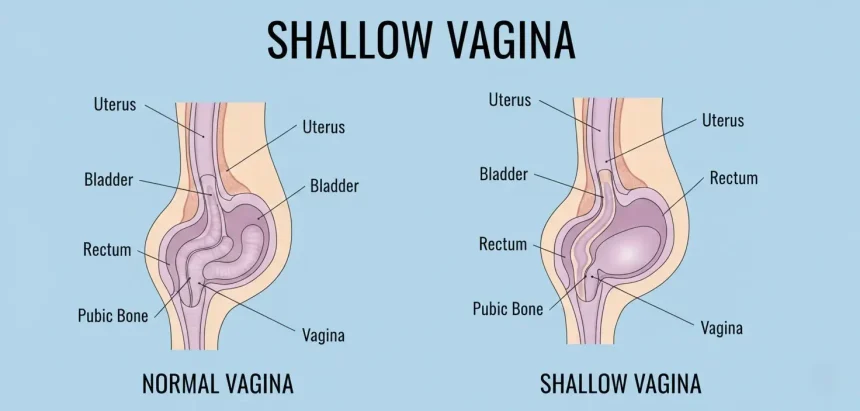
Conditions that can cause the vagina to be shallow
Several medical conditions affect vaginal penetration comfort. Diagnosis helps guide suitable treatment.
Vaginismus
Vaginismus triggers involuntary vaginal muscle tightening during insertion attempts. This reflex response blocks tampons, fingers, toys, or intercourse.
Treatment often combines pelvic floor exercises with sex therapy. Vaginal dilator use gradually supports comfort and muscle relaxation.
Tilted uterus
A tilted uterus points toward the spine rather than the abdomen. Canal length remains unchanged, yet penetration angle may cause discomfort. Rear penetration positions may feel uncomfortable.
Position adjustments or guided exercises often improve comfort. Surgical discussion happens rarely, based upon severity.
Vaginal stenosis
Vaginal stenosis results from scar tissue development. Radiation therapy, surgery, or injury often cause this condition. Vaginal opening and canal width may shorten.
Treatment focuses on flexibility preservation. Vaginal dilator use and pelvic floor exercises remain common recommendations. Lubricant support helps reduce dryness.
MRKH syndrome
MRKH syndrome involves absent or underdeveloped vagina and uterus despite typical external genital appearance. Diagnosis often happens during puberty after absent menstruation.
Treatment options include dilation therapy or surgical creation of a vaginal canal, based upon individual needs and provider guidance.
See a doctor or other healthcare provider
Occasional discomfort may happen, yet ongoing pain or impossible penetration requires medical evaluation. Physical examination helps rule out infection or structural concerns.
Clear diagnosis supports targeted care plans that ease symptoms and reduce anxiety related to penetration.
Things to consider
Body differences remain normal. Pain signals deserve attention rather than dismissal. Early evaluation supports easier treatment outcomes. Supportive care often combines physical, emotional, and medical approaches.TryForHealth
FAQs for a shallow vagina
Q.What causes a shallow vagina feeling?
Muscle tension, scarring, vaginal dryness, vaginismus, vaginal stenosis, tilted uterus, or MRKH syndrome may create shallow sensation.
Q.Does vaginal canal length change?
Yes. Arousal causes natural elongation that supports comfortable penetration.
Q.Can pelvic floor exercises help?
Pelvic floor exercises support muscle control, relaxation, and penetration comfort.
Q.Are vaginal dilators safe?
Vaginal dilators often support gradual muscle relaxation under professional guidance.
Q.When should medical care be considered?
Persistent pain, repeated penetration difficulty, or emotional distress signals need for professional evaluation.