

Immediate Crisis Warning:
If you or someone you know is in immediate danger of self-harm or experiencing a mental health emergency, please contact local emergency services (such as 112, 100, 911, or 999) or reach out to a crisis helpline in your country immediately.
- What Is Depression?
- Common Depression Symptoms and Warning Signs
- Main Causes of Depression
- How Depression Affects Different Groups
- Supportive Recovery Tips for Depression
- When to Seek Professional Help
- Thoughts of Self-Harm
- Persistent Low Mood
- Difficulty Managing Daily Life
- Feelings of Worthlessness or Confusion
- Professional Treatment Options for Depression
- Mental Health Helplines (India)
- Conclusion
- Frequently Asked Questions (FAQs)
- 1. Can depression improve without professional treatment?
- 2.Can vitamin deficiencies or physical health conditions cause symptoms similar to depression?
- 3. What should I do if a friend or family member refuses to seek help?
- 4. Can depression return after recovery?
- 5. What are the early depression symptoms?
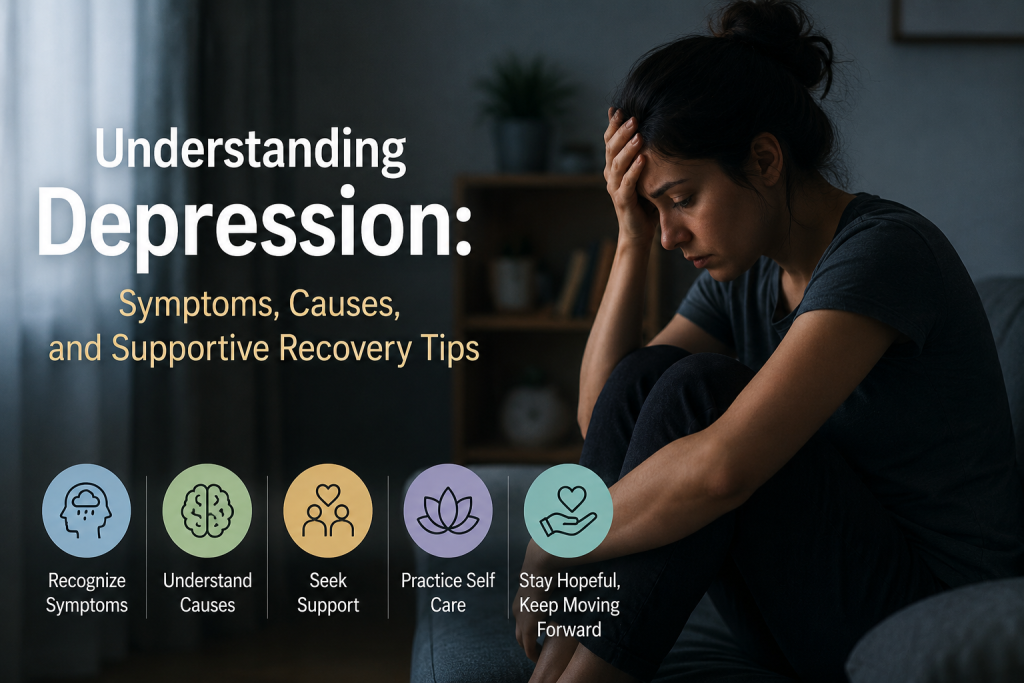
Depression symptoms can affect a person’s mood, thoughts, and overall ability to function in daily life. These depression symptoms may gradually interfere with emotional and physical well-being over time. According to the World Health Organization (WHO), depression is one of the leading causes of disability worldwide. Unlike temporary stress or sadness, symptoms may persist for weeks or longer and can begin to affect daily routines, relationships, and overall quality of life.
Early recognition of depression symptoms may support timely intervention and better recovery outcomes. This article explains common symptoms, possible causes, and practical supportive steps to help understand this condition.
What Is Depression?
Clinical depression is a serious mental health condition that affects a person’s mood, thoughts, and ability to function in daily life. It is more than temporary sadness or stress and may continue for a longer period if left untreated.
People experiencing this condition may find everyday tasks difficult due to ongoing emotional exhaustion, low motivation, and reduced energy levels.
It can affect work, studies, relationships, and overall well-being. Recovery often requires proper understanding, support, healthy coping strategies, and professional care when needed.
Common Depression Symptoms and Warning Signs
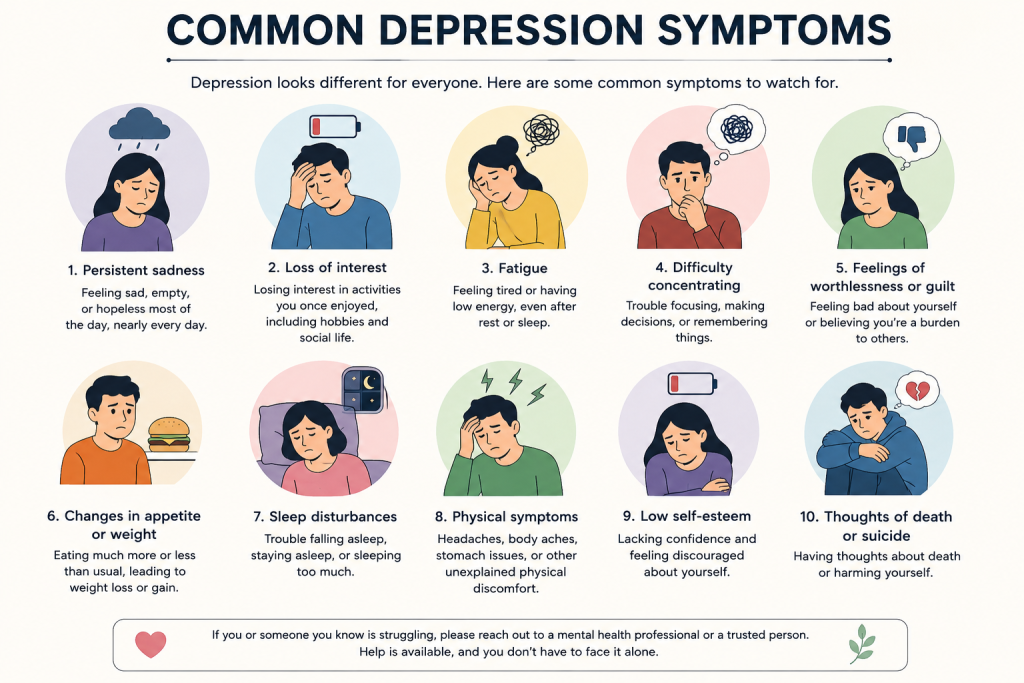
According to the American Psychiatric Association (APA), depression symptoms can affect individuals in different ways, impacting mood, thinking, and physical health. Early recognition of warning signs can help in getting timely support and care.
Common symptoms include:
Persistent Low Mood
Feeling sad, empty, or hopeless for most of the day over a longer period.
Loss of Interest
Losing interest in activities, hobbies, or social interactions that were once enjoyable.
Constant Fatigue
Ongoing tiredness or low energy, even after rest, making daily tasks feel difficult.
Sleep Problems
Difficulty falling asleep or sleeping much more than usual on a regular basis.
Changes in Appetite
Noticeable increase or decrease in eating habits, sometimes leading to weight changes.
Difficulty in Concentration (Brain Fog)
Trouble focusing, thinking clearly, or making simple decisions in daily life.
Irritability or Restlessness
Feeling easily frustrated, impatient, or emotionally reactive in small situations.
Physical Symptoms
Headaches, muscle tension, or stomach discomfort without a clear medical cause. Frequent headaches may sometimes overlap with migraine symptoms. Learn more about migraine symptoms and home relief tips in our related article.
Main Causes of Depression
According to the National Institute of Mental Health (NIMH), depression is rarely caused by a single factor. It usually develops due to a combination of biological, psychological, and environmental influences.
Common factors include:
Brain Chemistry Changes
Imbalances in brain chemicals that regulate mood can affect emotional stability.
Family History
A family history of mood disorders may increase the likelihood of experiencing similar mental health challenges.
Difficult Life Events
Experiences such as loss of a loved one, relationship problems, or financial stress can lead to emotional distress.
Ongoing Stress
Long-term pressure from work, studies, or personal life can gradually affect mental well-being.
Social Isolation and Loneliness
Extended periods of emotional disconnection or lack of support can negatively impact mental health.
How Depression Affects Different Groups
This condition varies from person to person depending on age, daily responsibilities, and lifestyle. Understanding these differences can help in identifying early warning signs more easily.
Students and Teenagers
Academic pressure, social expectations, and excessive screen time can affect mood and behavior. This may appear as a sudden drop in grades or withdrawal from friends.
Working Professionals
High career demands, long working hours, and poor work-life balance can lead to chronic stress, fatigue, and reduced motivation.
Parents and Caregivers
Managing household responsibilities, childcare, and financial pressure can become emotionally exhausting. In some cases, new mothers may also experience postpartum struggles after childbirth.
Older Adults
Life changes such as retirement, declining health, and reduced social interaction can lead to loneliness and emotional stress.
Supportive Recovery Tips for Depression
According to wellness guidelines from the Mayo Clinic, recovery from this condition often begins with small and manageable changes in daily life. Simple habits can gradually support emotional stability and improve overall well-being over time.
Here are some practical self-care steps:
Stay Connected with Others
Avoid isolation and try to stay in touch with trusted friends or family members. Social support can provide emotional comfort and reduce stress.
Focus on Small Daily Goals
When motivation is low, break tasks into simple steps. Even small achievements like basic self-care or completing one task at a time can help rebuild routine.
Keep Physically Active
Light activity such as walking or stretching may help improve mood and energy levels. Intense workouts are not required.
Maintain a Consistent Sleep Routine
Go to bed and wake up at regular times. Reducing screen use before sleep can improve sleep quality and help prevent digital eye strain symptoms.
Eat Regular, Balanced Meals
Avoid skipping meals and focus on nutritious foods such as fruits, vegetables, and whole grains to support stable energy and mood.
Take Breaks from Social Media
Stepping away from social media can reduce comparison-related stress. Offline activities like reading, journaling, or listening to music may help improve relaxation.
When to Seek Professional Help
While healthy lifestyle habits can support emotional well-being, professional support may also be important for recovery. According to the National Health Service (NHS), early treatment can improve recovery outcomes and help prevent symptoms from becoming more severe.
Consider speaking with a healthcare provider or mental health professional if these signs continue for more than two weeks:
Thoughts of Self-Harm
Frequent thoughts of self-harm, emotional distress, or feeling unsafe. If you or someone you know is in crisis, contact a local emergency service or mental health helpline immediately.
Persistent Low Mood
Feeling sad, empty, hopeless, or emotionally withdrawn for most of the day.
Difficulty Managing Daily Life
Routine responsibilities such as work, studies, or self-care begin to feel overwhelming.
Feelings of Worthlessness or Confusion
Ongoing guilt, low self-worth, or difficulty making simple daily decisions.
Professional Treatment Options for Depression
Professional treatment and support can play an important role in managing and recovering from depression. Common treatment options include:
Psychotherapy (Talk Therapy)
Licensed psychologists or counselors help individuals understand their thoughts, emotions, and behavior patterns. Therapies such as Cognitive Behavioral Therapy (CBT) can help people manage negative thinking and cope with daily stress more effectively.
Psychiatric Care
Psychiatrists are medical doctors who specialize in mental health conditions. They can diagnose depression and prescribe medications, including antidepressants, when needed.
Support Groups
Support groups allow individuals to connect with others facing similar challenges. Shared experiences and open conversations may help reduce feelings of isolation.
Mental Health Helplines (India)
If you or someone you know is experiencing emotional distress or a mental health crisis, seek immediate support from a qualified professional, local emergency service, or a trusted crisis helpline.
- KIRAN Mental Health Helpline (Government of India): 1800-599-0019
- AASRA Suicide Prevention Helpline: +91-22-27546669
These services provide confidential emotional support for individuals seeking help.
Conclusion
Depression is a serious mental health condition that can affect emotions, thoughts, physical health, and overall quality of life. Early awareness and timely care can support better recovery outcomes over time.
Healthy habits, emotional support, and professional treatment may help individuals manage symptoms more effectively. It is also important to remember that seeking help is not a sign of weakness.
If symptoms continue for an extended period or begin interfering with work, studies, relationships, or self-care, consider speaking with a qualified mental health professional.
Recognizing depression symptoms early may help individuals seek timely support and treatment.
Frequently Asked Questions (FAQs)
1. Can depression improve without professional treatment?
Mild emotional stress or temporary sadness may improve with rest, emotional support, and healthy lifestyle habits. However, long-lasting depression often requires professional care, guidance, and consistent self-care to support recovery.
2.Can vitamin deficiencies or physical health conditions cause symptoms similar to depression?
Yes. Certain health conditions, including thyroid disorders or low levels of Vitamin D and Vitamin B12, may cause fatigue, low mood, or reduced energy levels. Regular health checkups may help identify the underlying cause of these symptoms.
3. What should I do if a friend or family member refuses to seek help?
You cannot force someone to get help, but you can offer emotional support and a safe space to talk. Listening patiently and encouraging professional support without pressure may help them feel more comfortable over time.
4. Can depression return after recovery?
Many people recover from depression and continue to live healthy and fulfilling lives. However, symptoms may sometimes return during stressful situations. Healthy coping habits, emotional support, and professional care may help reduce the risk of relapse.
5. What are the early depression symptoms?
Early depression symptoms may include persistent sadness, loss of interest in daily activities, fatigue, sleep problems, and difficulty concentrating.