

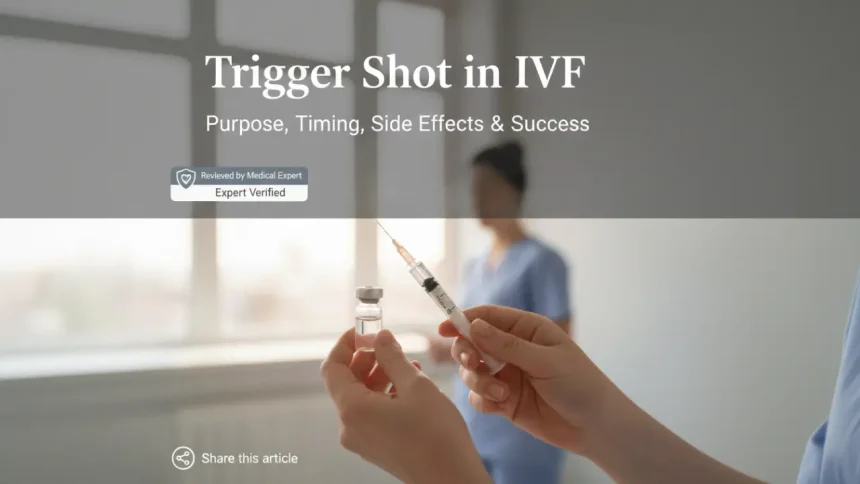
A Trigger Shot in IVF—also known as a trigger injection—is one of the most crucial steps in assisted reproductive treatments. It is a hormone-based injection used during fertility therapy to help the ovaries complete the final stage of egg maturation and prepare for ovulation. Most trigger shots contain human chorionic gonadotropin (hCG), while some protocols use a GnRH agonist, depending on individual treatment needs.
- Understanding IVF Trigger Shots
- When to Administer an IVF Trigger Shot
- How Are Trigger Shots for IVF Timed?
- Side Effects of Trigger Shots for IVF
- Success Rates of Trigger Shots in IVF
- FAQs: For Trigger Shot in IVF
- 1. What is a trigger shot in IVF?
- 2. Why is a trigger shot given during IVF?
- 3. When is the trigger shot given in an IVF cycle?
- 4. Which medicines are used as trigger shots in IVF?
- 5. Does a trigger shot guarantee pregnancy in IVF?
- 6. What are the side effects of a trigger shot in IVF?
- 7. Can a trigger shot fail to work?
- 8. Is the trigger shot injection painful?
- 9. What happens if the trigger shot timing is missed?
- 10. How long does the trigger shot stay in the body?
- Conclusion
During an IVF cycle, the trigger shot plays a decisive role in determining the timing and success of egg retrieval. Although fertility specialists guide patients throughout the process, it is natural to have questions about how trigger shots work. This article covers all the essential details about the Trigger Shot in IVF to help you better understand its purpose and importance.
Understanding IVF Trigger Shots
Trigger shots are often referred to as “pregnancy hormones” because hCG closely mimics luteinising hormone (LH). LH is naturally released by the pituitary gland just before ovulation and signals the ovaries to prepare mature eggs for release.
A Trigger Shot in IVF acts as this natural signal, ensuring that eggs complete maturation at the right time. It is a part of gonadotropin-based fertility treatment and is commonly recommended for individuals who:
- Do not ovulate naturally
- Have weak or irregular ovulation
- Require controlled ovulation during fertility procedures
The trigger shot also initiates meiosis, a critical biological process in which eggs reduce their chromosome count from 46 to 23. This step is essential for fertilisation, allowing the sperm’s chromosomes to combine properly with the egg.
When to Administer an IVF Trigger Shot
Fertility specialists carefully monitor follicle growth using ultrasound imaging and hormone blood tests. Once the follicles reach the optimal size, the Trigger Shot in IVF is scheduled—usually about 36 hours before egg retrieval.
This precise timing allows the eggs to mature fully while preventing natural ovulation before retrieval. The injection may be administered at a clinic or self-administered at home, depending on medical advice. It can be given into a muscle or fatty tissue and is usually taken only once per cycle, strictly following the doctor’s timing instructions.
After the trigger shot, egg retrieval is planned before the eggs are naturally released. Fertilised embryos are then transferred into the uterus for implantation. Trigger shots are often used in combination with other medications to manage:
- Anovulation (absence of natural egg release)
- Unexplained infertility
- In vitro fertilisation for various infertility causes
If a patient has previously experienced side effects, doctors may adjust the dosage or type of trigger shot.
How Are Trigger Shots for IVF Timed?
Ovulation generally occurs 36 to 40 hours after a Trigger Shot in IVF. During this period, fertility specialists closely monitor ovarian response through ultrasound scans. Follicles are typically considered ready when they measure between 15 and 22 mm, often observed between days 8 to 12 of the stimulation cycle.
Egg retrieval is scheduled within 36 hours after the injection. The collected eggs are fertilised using a partner’s or donor’s sperm. Embryos are then transferred 3 to 5 days later or frozen for future transfer.
Because trigger shots contain hCG, they can cause false-positive pregnancy test results if testing is done too early. Experts recommend waiting at least 10–14 days after the trigger shot before taking a pregnancy test, as it takes time for hCG to leave the body. Blood tests may also be prescribed to accurately measure hormone levels.
Side Effects of Trigger Shots for IVF
Trigger shots are generally considered safe, but side effects can vary depending on an individual’s health and response to fertility medications. One of the most significant risks is Ovarian Hyperstimulation Syndrome (OHSS).
OHSS occurs when the ovaries respond excessively to hormonal stimulation and is more common in individuals with PCOS. Symptoms may include:
- Swollen or painful ovaries
- Abdominal bloating or discomfort
- Fluid accumulation in the abdomen
- Breathing difficulties in severe cases
- Rapid weight gain (more than 2 pounds per day)
Careful monitoring during IVF cycles helps reduce the risk of complications and ensures early detection if symptoms appear.
Success Rates of Trigger Shots in IVF
Determining the success rate of a Trigger Shot in IVF alone is challenging because it is always used alongside other fertility medications and procedures. The overall outcome depends on multiple factors, including timing, medication type, ovarian response, age, and overall reproductive health.
Success Rates Based on hCG vs. GnRH Trigger
- hCG Trigger Shot:
This traditional option is widely used and is associated with high ovulation and egg retrieval success rates. However, it carries a higher risk of OHSS in individuals who respond strongly to stimulation. - GnRH Agonist Trigger Shot:
Commonly used for patients at higher risk of OHSS, including those with PCOS. It offers comparable egg retrieval outcomes but requires additional luteal phase hormonal support.
More health related information
FAQs: For Trigger Shot in IVF
1. What is a trigger shot in IVF?
A trigger shot is a hormone injection used in IVF treatment to help eggs reach final maturity and prepare the ovaries for egg retrieval.
2. Why is a trigger shot given during IVF?
The trigger shot is given to precisely control ovulation timing, ensuring that eggs are mature and ready for retrieval at the right moment.
3. When is the trigger shot given in an IVF cycle?
The trigger shot is usually administered 34–36 hours before egg retrieval, based on ultrasound and hormone test results.
4. Which medicines are used as trigger shots in IVF?
Common trigger shot medications include hCG injections (such as Ovidrel or Pregnyl) and GnRH agonist injections, depending on the patient’s condition.
5. Does a trigger shot guarantee pregnancy in IVF?
No, a trigger shot does not guarantee pregnancy. It only helps with egg maturation and ovulation timing. IVF success depends on multiple factors.
6. What are the side effects of a trigger shot in IVF?
Possible side effects include bloating, mild abdominal pain, nausea, breast tenderness, fatigue, and mood changes. Severe side effects are rare.
7. Can a trigger shot fail to work?
Yes, in rare cases the trigger shot may not work as expected, especially if ovarian response is weak or the injection timing is incorrect.
8. Is the trigger shot injection painful?
The injection may cause mild discomfort, but it is usually not very painful and the discomfort is temporary.
9. What happens if the trigger shot timing is missed?
Missing or delaying the trigger shot can affect egg quality or ovulation timing and may even lead to IVF cycle cancellation.
10. How long does the trigger shot stay in the body?
The trigger shot hormone can remain in the body for 8–10 days, which may sometimes affect pregnancy test results.
Conclusion
Understanding the role of a Trigger Shot in IVF can help patients feel more confident during fertility treatment. These injections are administered only during closely monitored cycles and play a critical role in egg maturation and successful retrieval.
Although the process involves frequent monitoring and precise timing, many individuals and couples have achieved positive outcomes when trigger shots are combined with advanced reproductive treatments. Consulting a fertility specialist is essential to determine whether this approach is suitable for your specific needs.