


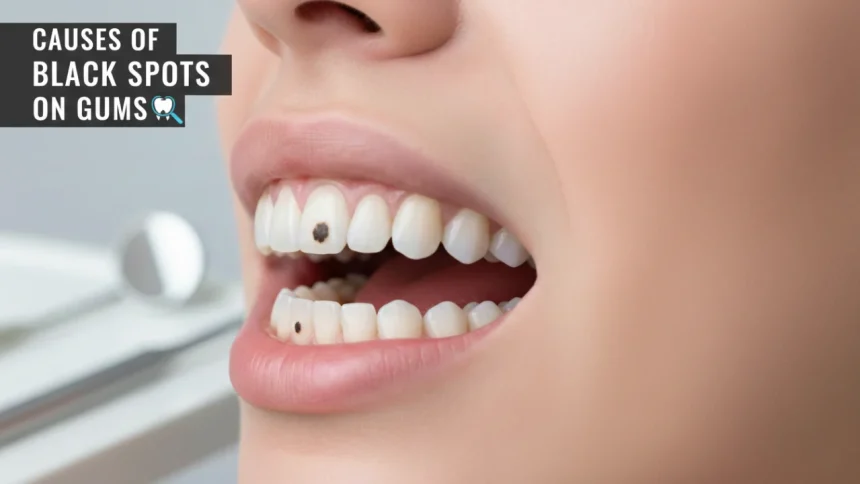
Black spots on gums are often not serious. Many times, these spots appear due to small injuries, moles, or natural pigment changes such as melanotic macules. However, in some cases, black spots on gums may be linked to serious oral health conditions such as oral cancer.
Gums are normally pink in color. Sometimes, dark brown, black, or bluish spots may appear on them. Several causes can lead to this change, and most of them are harmless. Still, it is important to pay attention to any spot that becomes painful or changes in size, shape, or color. Medical advice may be helpful in such cases.
Knowing the common causes of black spots on gums may help decide whether the issue can wait for a routine dental visit or needs earlier attention. This awareness-based content is shared by TryForHealth to support better oral health understanding.
1. Bruises
Gums can get injured just like skin. Eating foods with sharp edges, brushing teeth too hard, flossing roughly, or minor falls may cause bruises on the gums. These bruises usually appear dark red or purple, but they may also look brown or black. Mild pain or light bleeding may also be present.
Most gum bruises heal naturally without medical care. If bruises start appearing often and there is no clear reason, it may be linked to a blood condition called thrombocytopenia. Other signs may include nosebleeds or bleeding gums. A doctor can help identify the cause if this happens.
2. Eruption hematoma
When a tooth is about to come out, a fluid-filled swelling may form above it. Sometimes blood mixes with this fluid, giving the area a dark purple or black color. When blood is present, this condition is called an eruption hematoma.
Eruption hematomas are common in babies and children during teething. They usually disappear once the tooth comes through the gums. If the tooth does not erupt naturally, medical help may be needed to open the cyst.
3. Amalgam tattoos
Amalgam tattoos may appear after dental fillings. Small metal particles from the filling material may remain in the gum tissue near the treated tooth. This creates a dark blue, gray, or black spot.
These spots are harmless and permanent. They do not cause pain and usually do not need treatment. Dentists can easily identify amalgam tattoos during a dental checkup.
4. Blue nevus
A blue nevus is a harmless mole that may appear on the gums. It is usually round and flat or slightly raised. The color may look blue or black and often resembles a freckle.
Blue nevi often develop during childhood or teenage years and are more common in women. They usually remain unchanged. If the spot changes in shape, size, or color, further testing may be suggested.
5. Melanotic macule
Melanotic macules are small dark spots that look like freckles. They may appear on the gums, lips, or other areas of the mouth. These spots are usually brown or black and stay small in size.
Some people are born with melanotic macules, while others develop them later in life. They may also be linked to other health conditions. These spots usually do not need treatment but should be observed for changes.
6. Oral melanoacanthoma
Oral melanoacanthoma is a rare condition that causes dark patches inside the mouth, including the gums. These patches may spread quickly but are not cancerous.
This condition is more common in younger people and may be linked to irritation caused by chewing or friction. In most cases, no treatment is required.
7. Oral cancer
Oral cancer can also cause black or dark areas on the gums. Other signs may include sores that do not heal, bleeding, swelling, or changes in voice.
Doctors may use a biopsy or imaging tests to confirm the cause. Tobacco use and heavy alcohol intake increase the risk of oral cancer. Any unusual gum changes should be checked early.
The takeaway
Black spots on gums are usually harmless and may appear due to bruises, teething-related eruption hematoma, dental fillings, or pigment changes. In rare cases, they may be linked to oral cancer. Any new or changing spot should be monitored and discussed with a medical professional. TryForHealth focuses on sharing simple and balanced health information for awareness purposes.
FAQs
Why do black spots appear on gums?
Black spots on gums may appear due to small injuries, dental fillings, or natural pigment changes. In children, teething can also cause temporary dark areas on the gums.
Should I worry if I see a black spot on my gums?
Most black spots on gums are harmless and do not cause problems. Still, any spot that becomes painful, bleeds, or changes in size or color should be checked.
Are black spots on gums normal in children?
Yes, black or dark spots can appear on children’s gums, especially during teething. These spots often fade on their own once the tooth comes through.
Do black spots on gums go away on their own?
Some gum spots, such as bruises or teething-related swelling, may fade over time without care. Other spots may stay but usually do not cause harm.When should a doctor check black spots on gums?
A doctor should check gum spots that grow, change color, bleed, or remain for a long time. Early checking helps rule out serious oral health issues.