

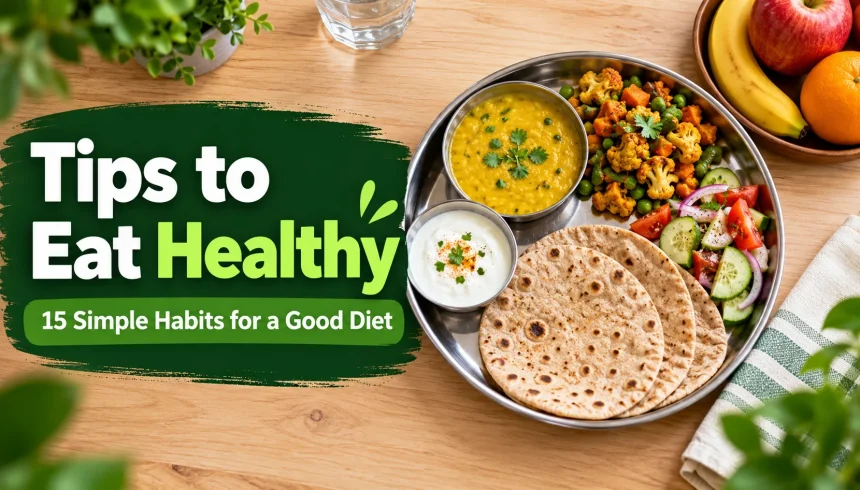
Most people don’t need a new diet plan. They need a few habits that survive a busy week. The best tips to eat healthy are small and a little boring: more vegetables, less sugar, regular meals, and enough water. You don’t need expensive superfoods or a chart stuck on the fridge.
- What does a good diet look like?
- 15 habits that build a good diet
- 1. Eat breakfast, and add protein
- 2. Fill half your plate with vegetables
- 3. Choose whole grains more often
- 4. Put protein in every meal
- 5. Eat your fruit, don’t drink it
- 6. Cut down on sugary drinks
- 7. Watch the hidden salt
- 8. Measure your cooking oil
- 9. Choose better fats
- 10. Read the label, and the menu
- 11. Eat slowly and stop at 80 percent full
- 12. Drink water through the day
- 13. Cook at home more often
- 14. Plan your snacks
- 15. Follow the 80/20 rule
- A Simple Day of Eating on a Good Diet
- Mistakes That Spoil a Good Diet
- Healthy Eating Goals for Young Adults
- Why Is It So Hard to Eat Healthy?
- Healthy meals to prepare ahead of time
A good diet is one that gives your body what it needs, keeps junk in check, and is something you can follow for years, not just for three weeks.
Below are 15 habits to help you build one. Pick the ones that fit your kitchen and leave the rest.
What does a good diet look like?
Balance, mostly. A good diet has plenty of vegetables and fruit, some protein, whole grains, and a small amount of healthy fat. Sweets and fried snacks are allowed, just not every day.
The World Health Organization gives three easy numbers to remember: at least 400 grams of fruit and vegetables a day, less than 5 grams of salt, and free sugars under 10 percent of your daily calories. Your own needs depend on age, activity, and body size, so treat these as a guide, not a strict rule.
15 habits that build a good diet
1. Eat breakfast, and add protein
Poha, toast, or cereal on its own digests fast and leaves you hungry by eleven. Add an egg, sprouts, paneer, or a bowl of curd. Protein keeps you full for longer, so the mid-morning biscuit becomes easier to skip.
2. Fill half your plate with vegetables
Before you serve rice or roti, cover half the plate with sabzi and salad. You eat a bigger portion for fewer calories, and your fiber goes up without any effort. Our guide to high volume low calorie food lists the vegetables and fruits that fill you up the most.
3. Choose whole grains more often
Swap some white rice and maida for brown rice, whole wheat roti, oats, ragi, or jowar. Whole grains keep their fiber, so you stay full longer and your blood sugar rises more slowly. They are the base of a good diet in most Indian homes. Start with one meal a day, not all three.
4. Put protein in every meal
Dal, eggs, fish, chicken, paneer, tofu, chickpeas, and curd all count. A good diet doesn’t need protein powder for most people. Regular food does the job. A palm-sized portion at each meal is a fair starting point.
5. Eat your fruit, don’t drink it
A whole orange has fiber and fills you up. A glass of juice carries the sugar of three or four oranges and almost none of the fiber. Among the benefits of eating peaches and other whole fruit is exactly this: you get water, fiber, and vitamins in one sweet snack.
6. Cut down on sugary drinks
Cola, packaged juice, sweet lassi, and bottled iced tea add sugar quickly. One can of cola has about 35 grams, which is more than the 25 grams that the stricter WHO limit allows for a whole day. If you want to know what regular sugar does to your body, read why too much sugar is bad for your health.
7. Watch the hidden salt
Salt is not only what you sprinkle on top. Pickles, papad, chips, instant noodles, namkeen, bread, and sauces carry plenty. Taste your food before you add more, and use lemon, herbs, or spices for flavor.
8. Measure your cooking oil
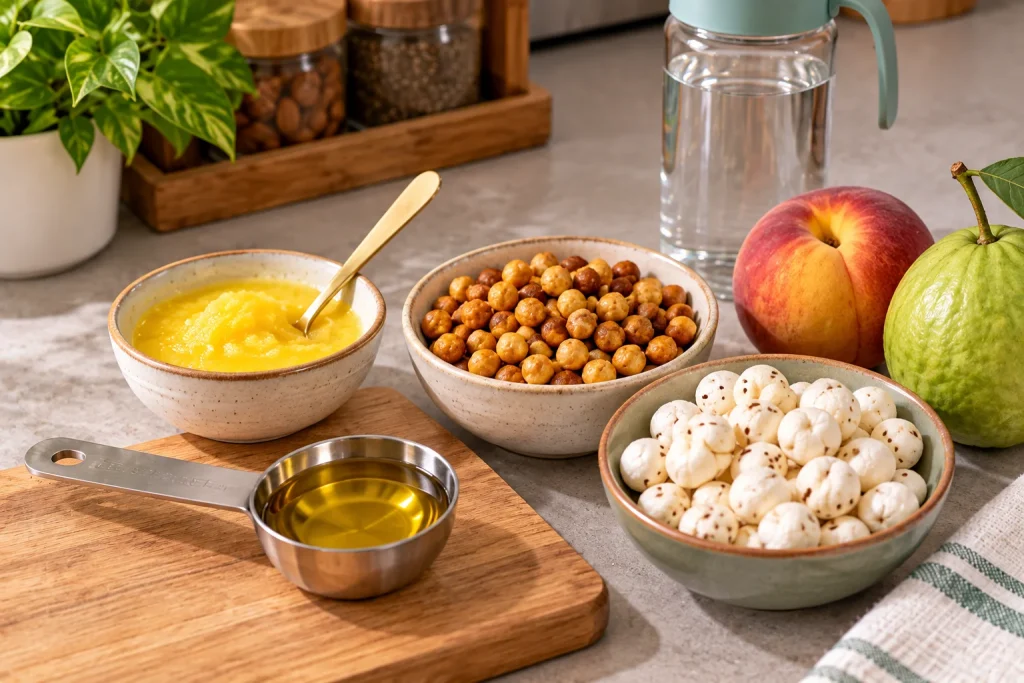
Pouring oil straight from the bottle is how a light sabzi becomes a heavy one. One teaspoon is about 40 calories. Use a spoon, and try pressure cooking, baking, or air-frying now and then.
9. Choose better fats
Fat is not the enemy. Nuts, seeds, avocado, and fish give you fats your body can use well. Ghee is fine in small amounts, but it is still very energy-dense. We have covered it in more detail in is ghee good for skin, including how much is sensible.
10. Read the label, and the menu
Check the ingredient list first. If sugar, syrup, or refined flour sits in the top three, think twice. Then look at sugar and sodium per serving, because the serving on the pack is often smaller than what you actually eat. Menus need the same suspicion. Sushi rolls sound light, but the calories in sushi rolls can surprise you.
11. Eat slowly and stop at 80 percent full
Your brain takes about 20 minutes to register fullness. Put the phone down, chew properly, and stop when you feel comfortable, not stuffed. A smaller steel plate or bowl also helps, because a full small plate looks more satisfying than a half-empty big one.
12. Drink water through the day
Keep a bottle nearby and sip often. Thirst is sometimes mistaken for hunger. Water, buttermilk, coconut water, and unsweetened tea all count. Needs vary, but pale yellow urine is a simple sign that you are drinking enough.
13. Cook at home more often
Home cooking gives you control over oil, salt, and portions, which is half the work of a good diet. It also costs less. Even three or four home-cooked dinners a week make a visible difference.
14. Plan your snacks
Planned snacks don’t turn into cravings. Keep roasted chana, makhana, peanuts, fruit, or cut cucumber ready. If the biscuits are not in the house, you won’t eat them at 5 p.m. A small box in your bag also saves you from the office samosa.
15. Follow the 80/20 rule
Eat well most of the time, and enjoy mithai or a slice of pizza the rest. A good diet has room for treats. Strict rules usually end in binges. If you like sweets, low carb diet desserts made at home are one way to enjoy something sweet with less sugar.
A Simple Day of Eating on a Good Diet
Here is what one ordinary day can look like. Nothing here is fancy, and you can swap items based on your region and taste.
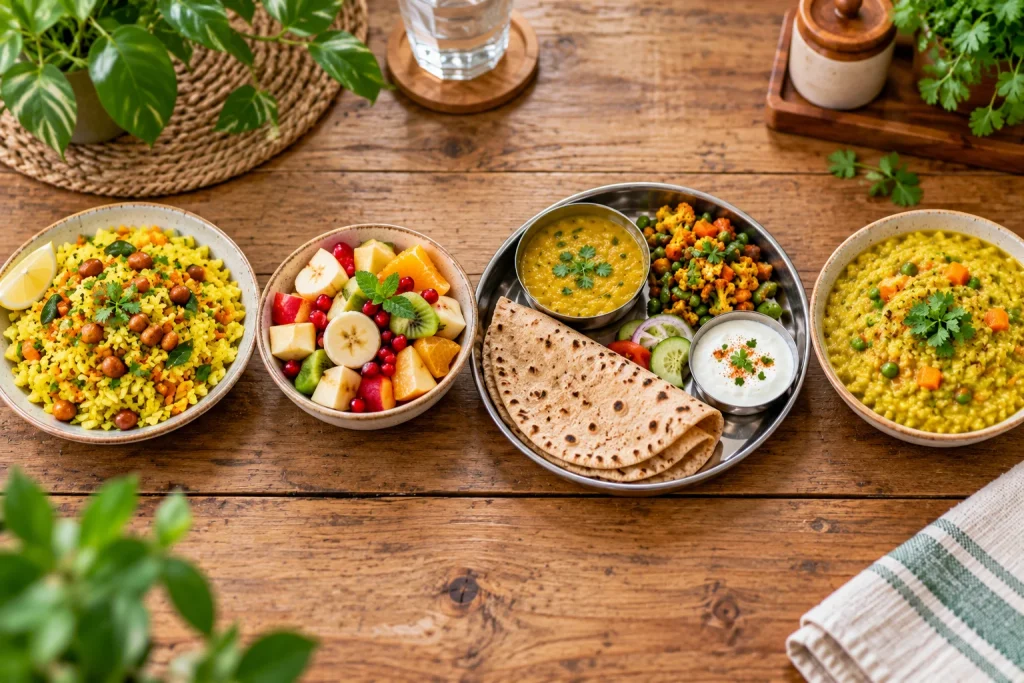
- Breakfast: Vegetable poha with peanuts, plus a boiled egg or a glass of milk.
- Mid-morning: One seasonal fruit.
- Lunch: Two rotis, a thick dal, a mixed sabzi, salad, and a small bowl of curd.
- Evening: Roasted chana or makhana with tea that has little sugar.
- Dinner: Moong dal khichdi with vegetables, or paneer bhurji with one roti and a cucumber salad.
Notice that nothing is cut out. The plate is just balanced, and the portions are sensible.
Mistakes That Spoil a Good Diet
Even people with good intentions slip up in a few predictable ways.
- Eating too little to lose weight fast. It leads to tiredness and strong cravings, and most people regain the weight.
- Trusting “healthy” packaged snacks. Protein bars, baked chips, and granola often carry a lot of sugar or salt. Check the label first.
- Copying a trend diet. What suits a celebrity or an influencer may not suit your health or your routine.
- Cutting out whole food groups. Dropping rice, fat, or dairy without a medical reason usually creates new problems.
Healthy Eating Goals for Young Adults
The same tips to eat healthy apply in your twenties, but students and young professionals have their own problems: skipped meals, canteen food, and late-night orders. A healthy diet for young adults can start with three goals:
- Cook or pack your own food at least three days a week.
- Eat a vegetable with two meals every day.
- Replace one sugary drink with water or buttermilk.
Set healthy eating goals that you can measure. “Eat better” is vague. “Have a fruit every afternoon for 30 days” is something you can tick off on a calendar.
Why Is It So Hard to Eat Healthy?
If you struggle, you are not alone. Why it is so hard to eat healthy usually comes down to a few things: junk food is cheap and everywhere, stress makes sugar attractive, and many of us eat on autopilot while scrolling. Planning works better than willpower, and a good diet does not need perfection. Decide your meals earlier in the day, keep tempting foods out of sight, and change one habit at a time. If you miss a day, just eat the next meal well.
Healthy meals to prepare ahead of time
A little weekend prep saves a lot of weekday junk. Healthy meals to prepare ahead of time include boiled chana, a pot of dal, chopped vegetables, cooked millets, and overnight oats. Store them in airtight boxes. Most keep well for two to three days in the fridge. This keeps a good diet on track even on the days you are tired.
Frequently Asked Questions
What are the best tips to eat healthy for beginners?
Start with three: fill half your plate with vegetables, drink water instead of sugary drinks, and cook at home a few times a week. Once these feel normal, add the rest from the list above.
What is a good diet for a normal adult?
A good diet includes vegetables, fruit, whole grains, protein such as dal, eggs, or paneer, and a small amount of healthy fat. It limits sugar, salt, and packaged food. The exact portions depend on your age, activity, and health.
How can I eat healthy on a budget?
Buy seasonal vegetables and fruit, use dal, chana, and eggs for protein, and buy whole grains in bulk. Home-cooked meals are almost always cheaper and healthier than packaged or delivered food.
Is it fine to eat rice and roti every day?
Yes, if portions are sensible and you pair them with dal, vegetables, and curd. Choosing whole grains some of the time adds more fibre.
How long does it take to build healthy eating habits?
It varies. One well-known study found an average of about two months for a new habit to feel automatic, with a wide range between people. Focus on one change at a time.
You do not need all 15 habits at once. Pick two this week, repeat them until they feel boring, and then add another. A good diet is built from many ordinary meals, not one perfect week.
If you have diabetes, kidney disease, or any other medical condition, speak to a doctor or a registered dietitian before changing your diet. For more simple guides on food and wellness, browse Try For Health.