

Bone health after 30 needs attention because bone loss usually causes no pain or warning signs. Often, a fracture is the first sign. Peak bone mass is generally reached by the late 20s to early 30s, so this is a good time to start supporting your bones with the right foods and daily habits.
- Bone Health After 30: What Changes?
- Key Nutrients for Bone Health
- Calcium Rich Foods for Strong Bones
- Lifestyle Habits for Strong Bones
- When to See a Doctor
- FAQs
- 1. Can bone density be improved after 30?+
- 2. Are eggs good for bones?+
- 3. Is ragi better than milk for calcium?+
- 4. Does yoga help bone health?+
- 5. Can I take calcium supplements without a doctor’s advice?+
- Conclusion
This guide is for adults in their 30s and beyond, and for anyone looking for simple ways to support their parents’ bones.
It covers the nutrients bones need, foods for strong bones that fit Indian meals, and habits worth building.
Bone Health After 30: What Changes?
Bones are living tissue. The body constantly breaks down old bone and builds new bone.
Until early adulthood, building is faster, which is how bones reach peak strength. After that, bone loss can gradually exceed new bone formation. Some factors speed this up.
What can speed up bone loss?
- Hormonal changes: In women, estrogen drops during and after menopause, which can lead to faster bone loss. In men, testosterone declines with age and can also affect bone strength.
- Low calcium and vitamin D intake: The body finds it harder to maintain bone without enough of both.
- Low physical activity: Bones respond to load, and long hours of sitting reduce it.
- Smoking and heavy alcohol use: Both are linked to lower bone density.
Thyroid problems, diabetes, kidney disease, and regular steroid use can also affect bones. If you have any of these, check with your doctor. Joint pain is a different problem, so read why your joints hurt and whether it could be arthritis.
Key Nutrients for Bone Health
Calcium is the main mineral in bone, but it does not work alone. Each of these nutrients plays a different role:
| Nutrient | Role in bone health | Main food sources |
| Calcium | Builds and maintains bone structure | Milk, curd, paneer, sesame seeds, ragi |
| Vitamin D | Helps the body absorb calcium | Sunlight, fatty fish, egg yolks, fortified foods |
| Magnesium | Supports normal bone health | Nuts, seeds, legumes, whole grains |
| Vitamin K | Supports normal bone metabolism | Leafy greens like methi and kale |
| Protein | Maintains bone structure and muscle strength | Dairy, eggs, fish, dal, beans |
How much do you need?
- Calcium: Most Indian adults need about 1,000 mg a day (ICMR-NIN).
- Vitamin D: Many people in India have low levels despite plenty of sunshine. Only a blood test (25-OH vitamin D) shows your level.
- Protein: Include dal, eggs, dairy, or legumes in every main meal.
Take vitamin D or calcium supplements only when a doctor recommends them. High doses without advice can cause harm.
Calcium Rich Foods for Strong Bones
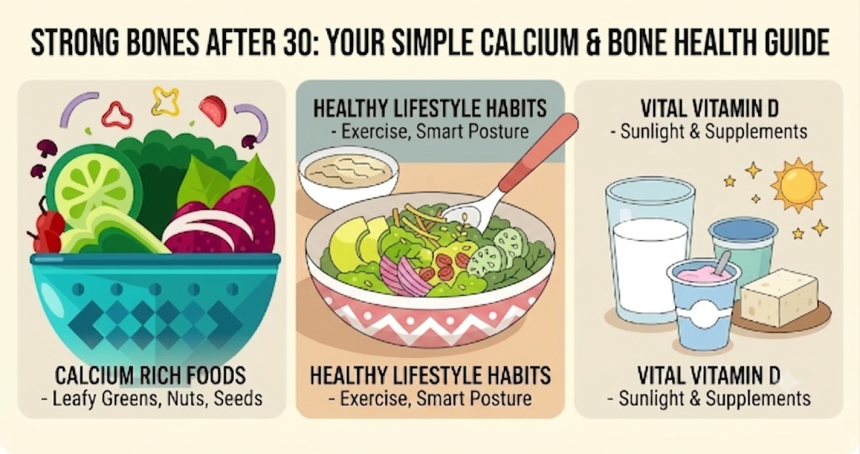
You do not need costly supplements to meet your bone nutrient needs. Most of what you need is already in an Indian kitchen. Here are five food groups to eat regularly.
- Dairy (milk, curd, paneer): One glass (250 ml) of milk gives about 300 mg of calcium. Curd and paneer add calcium and protein.
- Leafy greens (methi, sarson, kale): They supply calcium, magnesium, and vitamin K1. Spinach contains oxalates that lower calcium absorption, so do not depend on it.
- Nuts and seeds (til, almonds, walnuts): One tablespoon of sesame seeds provides roughly 90 to 130 mg of calcium. Sprinkle it on sabzi or roti.
- Fatty fish and egg yolks: These are among the few natural sources of vitamin D, which helps the body absorb calcium.
- Dal, chana, and rajma: They give protein and magnesium. One bowl a day is enough.
If you avoid dairy: Ragi (in roti or porridge), calcium-set tofu, and fortified plant milk are good alternatives.
Lifestyle Habits for Strong Bones
Food gives bones the raw material, but daily habits decide how well the body uses it. Bones get stronger when they are put under regular load, so movement matters as much as diet.
1. Do Weight-Bearing Exercises
Weight-bearing exercises are activities where you move against gravity, such as brisk walking, jogging, climbing stairs, or dancing.
Muscle-strengthening exercises, such as squats, push-ups, or resistance band work, add load to bones and muscles together.
Goal: Aim for weight-bearing exercises on most days of the week, plus muscle-strengthening activities 2 to 3 days a week.
A simple weekly plan:
- Mon, Wed, Fri: 30-minute brisk walk or stair climbing
- Tue, Thu: 20 minutes of squats, wall push-ups, and resistance band rows
- Sat: Jogging, cycling, dancing, or a sport you enjoy
- Sun: Rest or a light walk
If you already have bone or joint problems, ask your doctor which exercises are safe for you.
Swimming and cycling are good for fitness but put less load on bones, so pair them with walking or strength work.
2. Get Safe Sun Exposure
Sunlight helps the skin make vitamin D, which the body needs to absorb calcium.
Goal: About 15 to 20 minutes of midday sun (roughly 10 AM to 3 PM), with face, arms and legs exposed, is a common general guide.
- Early morning and late evening sun has less UVB, so it makes less vitamin D.
- Needs vary with skin tone, season and location, and people with darker skin usually need longer.
- Do not stay in strong sun long enough to burn.
3. Watch Salt, Tea and Coffee
A high-salt diet increases the calcium lost in urine, and very high caffeine intake can slightly affect calcium balance. This matters mostly when calcium intake is already low.
Goal: Keep salt moderate (less than 5 g a day, as per WHO guidance) and limit tea or coffee to 2 to 3 cups a day.
Avoid taking calcium supplements right with tea or coffee.
4. Avoid Smoking and Limit Alcohol
Tobacco and heavy drinking are linked to lower bone density and a higher risk of fractures over time.
Goal: Do not smoke, and keep alcohol occasional and moderate.
When to See a Doctor
Bone loss has no early symptoms, so do not wait for pain. Talk to a doctor if you:
- Have had a fracture from a minor fall or injury
- Notice loss of height or a stooped posture
- Have persistent back pain or a dull, lingering ache
- Have a family history of osteoporosis or hip fracture
- Are a woman who has reached menopause
- Have a long-term condition or take steroids regularly
Your doctor may suggest a vitamin D blood test or a bone density (DEXA) scan to check your bone health.
FAQs
Peak bone mass is already reached by this age, so large gains are unlikely. But the right diet, strength training and weight-bearing exercises can help slow bone loss and maintain the bone you have. Bones respond to regular load, so consistency matters more than intensity.
Yes. Egg yolks contain small amounts of vitamin D, and eggs provide protein, which bones and muscles both need. Eggs alone will not meet your calcium needs, so have them along with dairy, greens or ragi.
Ragi has a good amount of calcium, but milk is easier to absorb and also gives protein and vitamin D (if fortified). Ragi is a very good option for vegetarians and vegans. For most people, including both is the best approach.
Some yoga poses, like standing poses and Warrior or Tree pose, put mild load on bones and improve balance, which lowers the risk of falls. Yoga works best alongside walking and strength training, not as a replacement.
It is better to check first. Too much calcium from supplements can cause problems like kidney stones or constipation. Get your diet and vitamin D level assessed, and let your doctor decide the dose.
Conclusion
Bone health after 30 depends on small habits that you repeat every day. Bone loss is silent, so waiting for symptoms means acting late.
Include calcium rich foods in your meals, get enough vitamin D through safe sun exposure and a doctor-guided test, and do weight-bearing exercises most days of the week. Avoid smoking and keep alcohol occasional. These steps can help reduce the risk of bone loss and keep you active as you age.
If you have symptoms such as frequent fractures or persistent back pain, see a doctor instead of waiting.
Medical Note:
This article is for general awareness and is not a substitute for medical advice. If you are concerned about your bone density or vitamin D levels, or have symptoms like frequent fractures or persistent back pain, please consult a doctor.