
By using this site, you agree to the Privacy Policy
Accept
Try For HealthTry For HealthTry For Health
  • Home
  • News & Perspective
    News & PerspectiveShow More
    The Homework Trap: Do Kids Really Need Screens to Learn?
    By Try For Health
  • Health Conditions
    Health Conditions
    The World Health Organization defines health as “a state of complete physical, mental, and social well-being and not merely the absence of disease or infirmity.”…
    Show More
    Top News
    Can Head Lice or Lice Treatments Cause Hair Loss?
    September 25, 2026
    Difference Between Presbyopia and Hypermetropia Explained
    Difference Between Presbyopia and Hypermetropia Explained
    September 25, 2026
    making-your-nose-smaller
    How to Make Your Nose Look Smaller: 6 Safe & Natural Methods
    September 25, 2026
    Latest News
    Rheumatoid Arthritis: Symptoms, Causes & Treatment
    September 25, 2026
    Osteoarthritis: Symptoms, Causes, Diagnosis, and Treatment
    September 25, 2026
    Why Do Your Joints Hurt? Could It Be Arthritis?
    September 25, 2026
    Morning Heel Pain: Is It Uric Acid ?
    September 25, 2026
  • Nutrition & Fitness
  • Beauty Lab
    Beauty LabShow More
    Is Ghee Good for Skin? Benefits, Uses, Side Effects & How to Apply
    By Try For Health
    Night-Care-Routine-for-Oily-Skin-Wake-Up-Fresh-Shine-Free
    Night Care Routine for Oily Skin: Wake Up Fresh & Shine-Free
    By Try For Health
    Coconut-Oil
    How Coconut Oil Helps Keep Your Lips Soft and Smooth
    By Try For Health
  • Food & Diet
    Food & Diet
    Eating a well-balanced diet means eating a variety of foods from each of the 5 food groups daily, in the recommended amounts.
    Show More
    Top News
    How-Many-Calories-Are-in-Your-Favorite-Sushi-Rolls
    How Many Calories Are in Your Favorite Sushi Rolls?
    September 25, 2026
    Colorful spread of high-volume low-calorie foods including vegetables, fruits, sprouts and eggs
    High-Volume, Low-Calorie Foods: 20 Options That Fill You Up
    September 29, 2026
    Healthy Indian meal good diet with roti, dal, sabzi, salad and curd, illustrating tips to eat healthy
    Tips to Eat Healthy: 15 Simple Habits for a Good Diet
    October 2, 2026
    Latest News
    Tips to Eat Healthy: 15 Simple Habits for a Good Diet
    October 2, 2026
    High-Volume, Low-Calorie Foods: 20 Options That Fill You Up
    September 29, 2026
    How Many Calories Are in Your Favorite Sushi Rolls?
    September 25, 2026
  • Blog
Notification Show More
Font ResizerAa
Try For HealthTry For Health
Font ResizerAa
  • Food & Diet
  • Beauty Lab
  • Anatomy
  • Health Conditions
  • News & Perspective
  • Nutrition & Fitness
  • Categories
    • Health Conditions
    • Anatomy
    • Food & Diet
    • Beauty Lab
    • News & Perspective
    • Nutrition & Fitness
  • More Foxiz
    • Blog Index
    • Sitemap
Follow US
Health Conditions

How to Use Honey to Help Your Eyes

Try For Health
Last updated: September 25, 2026 10:39 am
By Try For Health
Share
5 Min Read
Honey-Benefits-for-Eye-Health-and-Care
SHARE

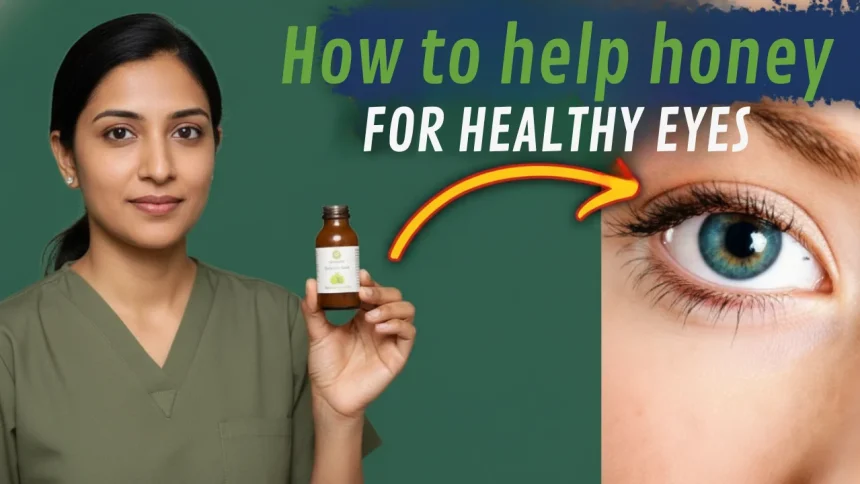
Honey is widely known as a natural sweetener, but it has also been valued for centuries due to its antimicrobial, soothing, and wound-healing properties. Traditional healing systems such as Ayurveda have long used honey as a supportive remedy for various eye-related concerns.

Contents
  • Benefits of Using Honey for Your Eyes
    • Keratoconjunctivitis
    • Corneal Ulcers
    • Blepharitis
    • Dry Eyes
    • Reduces Wrinkles Around the Eyes
    • Bacterial Conjunctivitis (Pink Eye)
  • Can Honey Lighten Eye Color?
  • Honey in Eyes: Side Effects
  • Takeaway
  • FAQs
    • Can honey help with eye irritation?
    • Is honey safe for direct eye use?
    • Can honey change eye color naturally?
    • Which type of honey is preferred for eye care?
    • When should a doctor be consulted?

When properly diluted and applied topically, honey may help reduce eye irritation, calm inflammation, and limit the growth of certain harmful bacteria. Because of these properties, honey is sometimes considered as a supportive option for eye comfort and care.

This educational guide by TryForHealth explains the potential benefits of honey for eye health, safety considerations, and what current research suggests.

Benefits of Using Honey for Your Eyes

Honey contains natural anti-inflammatory and antimicrobial compounds that may support eye comfort when used carefully. Its soothing nature may help with dryness and mild irritation.

Specialty-grade honey, such as Manuka honey, has been studied when mixed with sterile saline or artificial tears for topical eye use. Below are eye conditions where honey has been explored as a supportive option.

Keratoconjunctivitis

Keratoconjunctivitis is associated with corneal dryness and irritation, often linked with seasonal allergies. Some studies have observed that honey-based artificial tears helped reduce redness and discomfort compared to standard treatments.

Corneal Ulcers

Corneal ulcers are open sores on the outer layer of the eye, often caused by infection. Honey’s antimicrobial and wound-healing properties may help control infection and support healing when used in a properly diluted form under medical supervision.

Blepharitis

Blepharitis causes redness, swelling, and irritation around the eyelids. Limited research, including animal studies, suggests that Manuka honey may help reduce inflammation and bacterial presence, though larger human studies are still required.

Dry Eyes

Dry eye occurs when tear glands fail to produce enough moisture. Honey-based eye drops and gels are being studied for chronic dry eye, with findings showing reduced redness and discomfort among some participants.

Reduces Wrinkles Around the Eyes

Honey helps retain moisture in the skin and may support skin softness. When mixed with water or natural oils, it is sometimes applied externally around the eyes to help reduce dryness and fine lines.

Bacterial Conjunctivitis (Pink Eye)

Honey’s antimicrobial activity has been studied for bacterial conjunctivitis. Properly diluted honey may help slow bacterial growth and reduce redness and irritation, though it should never replace prescribed treatment.

Can Honey Lighten Eye Color?

Eye color depends on melanin pigment levels. Some believe that applying honey mixed with water can gradually lighten eye color, but no scientific evidence supports this claim.

Honey does not penetrate beyond the outer layers of the eye, while eye color is determined by deeper structures. Therefore, honey cannot change eye color naturally.

Honey in Eyes: Side Effects

Raw honey should never be placed directly into the eyes. If honey is used, it must always be diluted and sterile.

Commercial honey-based eye drops are available, but homemade mixtures require strict hygiene. Any burning, discomfort, or irritation should lead to immediate discontinuation and medical consultation.

TryForHealth strongly advises speaking with a qualified healthcare professional before using honey for any eye condition.

Takeaway

Research suggests that diluted honey may support eye comfort in conditions such as dryness, irritation, and certain bacterial concerns. However, there is no scientific evidence supporting claims that honey can change eye color.

Honey should never replace prescribed eye medication. Content shared by TryForHealth is intended for educational awareness and does not substitute professional medical advice.

FAQs

Can honey help with eye irritation?

Diluted honey may help soothe irritation and redness due to its calming and antimicrobial properties, when used safely.

Is honey safe for direct eye use?

Raw honey should not be used directly in the eyes. Only sterile, properly diluted preparations should be considered.

Can honey change eye color naturally?

There is no scientific evidence supporting the idea that honey can change eye color.

Which type of honey is preferred for eye care?

Specialty-grade honey, such as Manuka honey, has been studied, but professional guidance is recommended.

When should a doctor be consulted?

Eye pain, signs of infection, or changes in vision require immediate medical attention.

Share This Article
Facebook Copy Link Print
Leave a Comment Leave a Comment

Leave a Reply Cancel reply

Your email address will not be published. Required fields are marked *

Fast Four Quiz: Precision Medicine in Cancer

How much do you know about precision medicine in cancer? Test your knowledge with this quick quiz.
Get Started
How Coconut Oil Helps Keep Your Lips Soft and Smooth

Coconut oil is one of the best natural ways to keep lips…

Ways to Reduce Saddlebag Fat on Thighs Naturally

Saddlebag fat means extra fat on the outer part of the thighs.…

What Is Dull Pain? Causes, Symptoms & Effective Treatment

Pain is one of the body’s most important warning signals, and it…

Your one-stop resource for medical news and education.

Your one-stop resource for medical news and education.
Sign Up for Free

You Might Also Like

making-your-nose-smaller
Health Conditions

How to Make Your Nose Look Smaller: 6 Safe & Natural Methods

By Try For Health
Digital Eye Strain
Health Conditions

Digital Eye Strain: Proven Relief Tips for Tired Eyes

By Try For Health
Tissue-Salts-12-Types-Uses-Benefits-Efficacy-Side-Effects
Health Conditions

Tissue Salts: 12 Types, Uses, Benefits & Side Effects

By Try For Health
Breast-Milk-Recipes-for-Babies-Purees-Snacks-Meals
Health Conditions

Breast Milk Recipes for Babies: Purees, Snacks & Meals

By Try For Health
try for health logo
Facebook Twitter Pinterest Youtube Instagram
Company
  • Privacy Policy
  • Editorial Policy
  • Accessibility Statement
  • Contact US
  • Feedback
  • Advertisement
More Info
  • Newsletter
  • Beauty Lab
  • News & Perspective
  • Food & Diet
  • Health Conditions
  • Nutrition & Fitness
  • Anatomy

Sign Up For Free

Subscribe to our newsletter and don't miss out on our programs, webinars and trainings.

Join Community

Made by ThemeRuby using the Foxiz theme. Powered by WordPress

Welcome Back!

Sign in to your account

Username or Email Address
Password

Lost your password?